
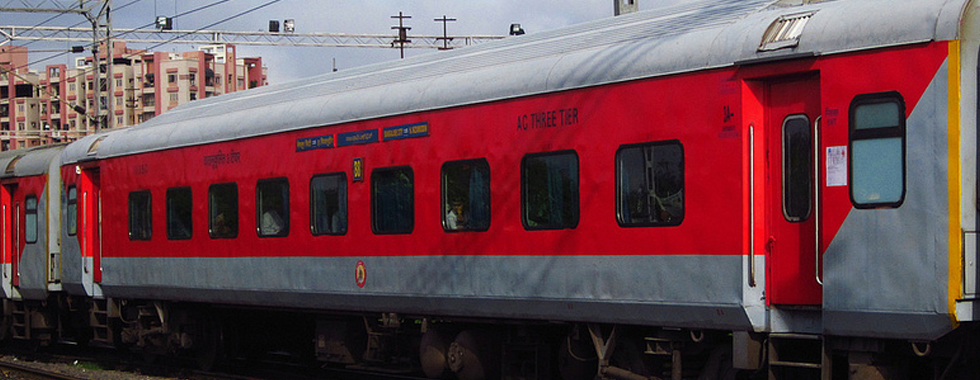
GST effect: AC, first class train fares to go up marginally
With the Goods and Services Tax (GST) coming into effect from July 1, train passengers will have to pay a bit more to travel AC and first class. Service tax on ticket charges is set to be hiked from 4.5 per cent to 5 per cent after the GST implementation.
Service tax is levied only on AC and first class fares in the Railways. So if a ticket costs Rs 2000, then a passenger will have to shell out Rs 2010 from the next month, said a senior railway ministry official.
Gearing up for the GST roll-out from from July 1, the Railways has appointed nodal officer in each state to ensure smooth transition into the new single tax regime. A consultant has been appointed for examining the impact of the GST in the Indian Railways, the official said. Since GST registration is based on PAN details, Railways has already got its PAN.



You might also like

Thailand launches Thai-Licious Journey campaign at ITB Berlin 2017
The Tourism Authority of Thailand (TAT) today launched a new tourism marketing campaign with the theme “Thai-Licious Journey” to entice foodies from around the world to explore “Thainess” through unique

Three new flights to three new destinations in just three days
Africa’s largest airline group, Ethiopian Airlines, is delighted to announce that it has finalized preparations to launch flights to three new destinations – Victoria Falls, Oslo and Antananarivo – within

Taiwan Tourism Administration Invites Indian Businesses to Taiwan for Site Inspection to Expand the MICE Market
First Group Focuses on Yilan, Followed by Taichung and Kaohsiung Inspections in the Second Half of the Year To actively cultivate the international tourist market, the Ministry of Transportation and