
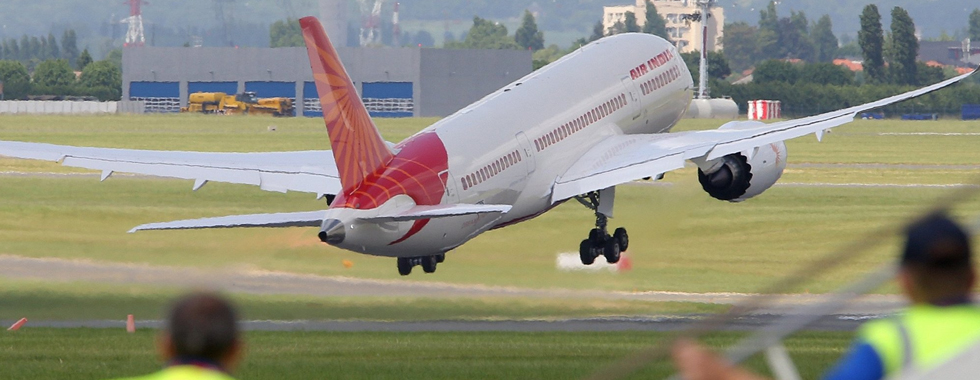
49% FDI in aviation: The political privatisation of Air India is underway
The incremental approach towards the divestment is obviously aimed at ensuring that non-controlling partial ownership doesn’t fall into ‘undesirable’ hands.
The government has taken one more small step in coming to grips with one of the most difficult parts of giving a decent burial to the Indian public sector – privatising Air India. It has allowed foreign airlines to own up to 49% of the national carrier. A year ago, it had announced its decision to strategically divest its stake in the carrier.This puts Air India at par with other Indian carriers in which foreign airlines already have the liberty to own up to 49%. But the government has not gone the whole hog. Indians will still need to hold effective control over the company. Furthermore, the investment will have to come in via the approval and not automatic route.Why an entity or a group with 49% stake in the company will be happy not to exercise control is not clear. The likely answer is that any investment coming in now will be with an eye on being ahead of other aspiring stakeholders while waiting for further relaxation of norms.The ‘one step at a time’ approach by the government is obviously aimed at ensuring that even non-controlling partial ownership does not fall into “undesirable” hands which can have an adverse political fallout for the government. This is particularly so because the parliamentary standing committee for the ministry concerned has come out against privatisation and recommended a five-year wait during which time an effort can be made to turn the company around.The incremental approach to eventual strategic disinvestment is also aimed at giving enough time to all the stakeholders to prepare themselves for privatisation, thus removing any chance of strong adverse reaction to any unexpected development.Further, an incremental approach enables better price discovery. The status of assets (how effectively unencumbered they are) gets clarified as a promoter (in this case the government) takes steps to clean them up and dress them up as attractively as possible.Aviation industry experts value Air India at around $10 billion (excluding land), which means that disinvesting halfway will fetch the government $5 billion (upwards of Rs 30,000 crore – no mean sum). The point is that, land, including prime assets like the Air India tower at Nariman Point, should also be sold. This is because the government is not good at speculating on land, that is holding on to it while waiting for property prices to peak.Currently, the real estate market is down but at some point in the incremental journey towards privatisation, prices will pick up.
The actual valuation realised will depend on how transparently and efficiently the auction process is conducted. Properly done, $10 billion is a kind of a floor price. Eventual sale is preferable as the government is intrinsically not good at extracting the best value out of land, particularly in commercial areas, on an ongoing basis.
News Source: www.business-standard.com



You might also like

Air India to Operate Special Flight to Arrakonam From Hyderabad
Government-owned Air India said it will operate a special flight to the Arrakonam Naval Air Station from Hyderabad to ferry the stranded passengers, who have been airlifted from Chennai airport

Uttarakhand seeks assistance for tourism related projects from MoT
Uttarakhand’s Tourism Minister meets Dr Mahesh Sharma and sought assistance for tourism related projects from MoT. The Union Minister of State for Tourism (Independent Charge), Culture (Independent Charge) and Civil Aviation, Dr. Mahesh Sharma held a

Costa Fascinosa reserved exclusively for Indian wedding
In a first, a ship from the Costa Cruises fleet has been reserved exclusively for the celebration of a fairy-tale wedding of the son of an Indian industrialist. In a