



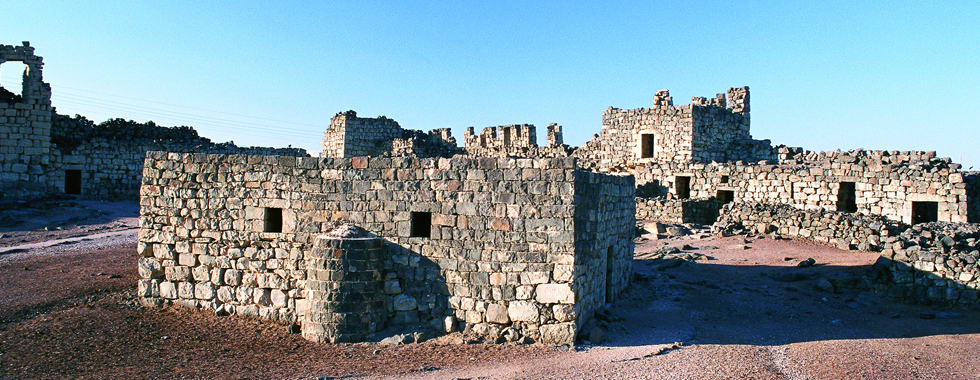
World’s first discovery about early use of stone age tools made in Jordan!
The research team from UVic and partner universities in the US and Jordan has found the oldest evidence of protein residue — the residual remains of butchered animals including horse, rhinoceros, wild cattle and duck — on stone tools. The discovery draws startling conclusions about how these early humans subsisted in a very demanding habitat, thousands of years before Homo sapiens first evolved in Africa.
New research published in the Journal of Archaeological Science by a team led by paleoanthropologist April Nowell of the University of Victoria reveals surprisingly sophisticated adaptations by early humans living 250,000 years ago in a former oasis near Azraq, Jordan. The findings suggest these early Stone Age hominins were eating a range of meats, and were particularly partial to horse, rhino and duck.
A team from the University of Victoria, working with researchers in Jordan and the US, unearthed 10,000 stone tools during a three-year excavation in the deserts northwest of the town of Azraq. While the region is dry and arid today, hundreds of thousands of years ago it is believed to be the site of wetlands – ideal hunting grounds.
They found that several of stone tools excavated at the site bore traces of animal protein – residues of blood, skin and flesh from the butchering process. According to scientists, the discovery could be the oldest evidence of animal protein ever found and hints at sophisticated behavioural adaptations from these early hominins.
The team excavated 10,000 stone tools over three years from what is now a desert in the northwest of Jordan, but was once a wetland that became increasingly arid habitat 250,000 years ago. The team closely examined 7,000 of these tools, including scrapers, flakes, projectile points and hand axes (commonly known as the “Swiss army knife” of the Paleolithic period), with 44 subsequently selected as candidates for testing. Of this sample, 17 tools tested positive for protein residue, i.e. blood and other animal products.
“Researchers have known for decades about carnivorous behaviours by tool-making hominins dating back 2.5 million years, but now, for the first time, we have direct evidence of exploitation by our Stone Age ancestors of specific animals for subsistence,” says Nowell. “The hominins in this region were clearly adaptable and capable of taking advantage of a wide range of available prey, from rhinoceros to ducks, in an extremely challenging environment.”
“What this tells us about their lives and complex strategies for survival, such as the highly variable techniques for prey exploitation, as well as predator avoidance and protection of carcasses for food, significantly diverges from what we might expect from this extinct species,” continues Nowell. “It opens up our ability to ask questions about how Middle Pleistocene hominins lived in this region and it might be a key to understanding the nature of interbreeding and population dispersals across Eurasia with modern humans and archaic populations such as Neanderthals.”
Another result of this study is the potential to revolutionize what researchers know about early hominin diets. “Other researchers with tools as old or older than these tools from sites in a variety of different environmental settings may also have success when applying the same technique to their tools, especially in the absence of animal remains at those sites,” adds Nowell.



You might also like

Visit Maldives Storytellers’ Conference 2023 Social Media Competition kicks off with 50+ Free Trips to the Maldives
Maldives Marketing & Public Relations Corporation (MMPRC/Visit Maldives) is excited to announce that the social media competition to select 50+ participants for MMPRC’s largest event held in the Maldives this

India Announces Extension of e-Tourist Visa scheme to more countries
The e-Tourist Visa (e-TV) facility will be extended to 37 more countries from tomorrow. The total count of countries under the scheme will become 150. The new 37 countries included
Suresh Prabhu assigned additional Charge of Civil Aviation Ministry
Commerce Minister Suresh Prabhu has been assigned additional charge of Civil Aviation Ministry vacated by Telugu Desam Party’s Ashok Gajapathi Raju last week to protest the centre’s refusal to give