
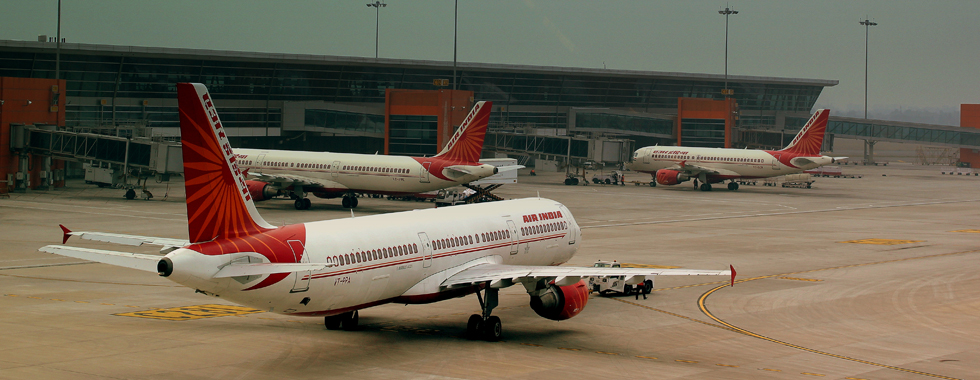
Air India to be split into four entities before sale
India will break up its debt-burdened flag carrier Air India into four separate companies and offer to sell at least 51 per cent in each of them as part of a disinvestment proposed by PM Narendra Modi. The core airline business comprising Air India and Air India Express — the low-cost overseas arm — will be offered as one company, and the process will be completed by the end of 2018, junior aviation minister Jayant Sinha said in an interview lately. Its regional arm, ground handling, and engineering operations will also be sold separately in the same process.
A successful sale of Air India (AI) — with $7.9 billion in debt, five subsidiaries and a joint venture, and a combined workforce of 27,000 — is crucial for Modi, who wants to showcase his credentials as a reformist. The airline, which is surviving on a taxpayer-funded bailout, has strained government finances for decades, and finance minister Arun Jaitley said last year that money spent on Air India could have been used for education.
“The aviation sector is a very fast growing sector, with really exciting opportunities for all participants, so we felt all of this will unlock growth and competitiveness of Air India group,” Sinha said. “We expect it to be a very bright future for its employees.”
Sinha declined to name potential bidders but said management control will be retained by local investors. The government altered foreign investment rules last week, allowing foreign airlines to own as much as 49 per cent of Air India. Investors’ interest will be sought by end of this month with details on Air India’s core and non-core debt and assets, he added.
The government will add most of the non-core debt owed by the carrier to its own balance sheet, while borrowings linked to core operations will be retained by the unit on offer, Sinha said. A so-called special purpose vehicle will hold the unsustainable debt of the airline and the government is making “every effort” to protect employees.
Air India has been unprofitable since its 2007 merger with state-owned domestic operator Indian Airlines Ltd. The company made an operating profit of about Rs 1 billion ($15.7 million) in the year through March 2016, primarily due to a slump in oil prices. It still posted a net loss of Rs 38.4 billion, according to the government.
India, the world’s fastest growing major aviation market, may not sustain the current 15-20 per cent growth in the long term, but will expand at about 12 per cent annually. To handle the surge in passengers, the country will need investments of as much as Rs 4 trillion to expand and build new airports over the next decade-and-a-half, with the bulk of it coming from the private sector.
Carriers in India, including market leader IndiGo, are set to order more than 1,000 planes as they look to tap an emerging middle class with disposable income to fly for the first time, according to Sydney-based CAPA Centre for Aviation. However, capacity constraints at the main airports in New Delhi and Mumbai mean there are hardly any landing and parking slots available. The government is in the process of implementing new airports in these two cities and, in the short-term, improving infrastructure at nearby airports to handle some of that growth.
“As of now, we have very significant expansion plans underway. We’ve looked at the top 30 airports in the country,” Sinha said. “We now have a very clear roadmap for the next 15-20 years as to what we have to do.”



You might also like
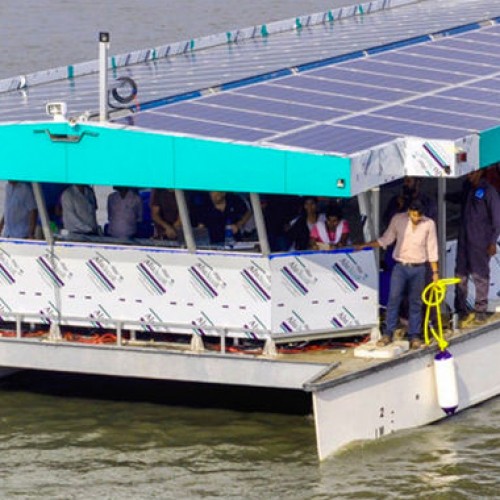
Kerala comes up with new water transport solution as Solar cruise boat
Buoyed by the success of Aditya, the first solar-powered ferry launched at the start of this year, the Kerala State Water Transport Department (SWTD) is all set to launch a

New York City welcomed record 62.8 million visitors in 2017
Mayor Bill de Blasio and NYC & Company New York City’s official destination marketing organization announced that 2017 was the eighth consecutive year for record-breaking tourism, with the City welcoming
WeChat showcases CityExperience Mini Program to help the global tourism industry
WeChat showcases CityExperience Mini Program to help the global tourism industry target Chinese travellers Dubai, London and Sydney are pioneer destinations to offer Chinese tourists local travel tips and experiences. WeChat