
Asian cities dominate top 10 rankings of international tourist arrivals in 2017, says GlobalData
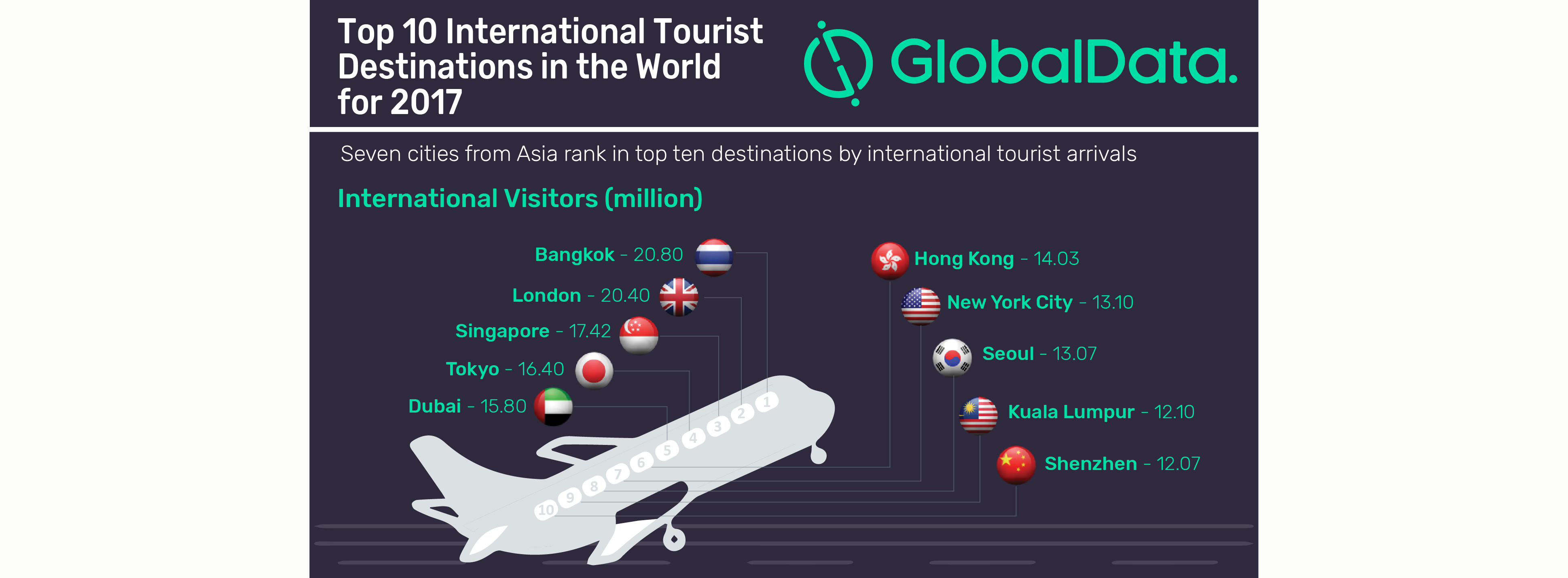
Asian cities had outnumbered their counterparts in Europe and America in terms of international tourist arrivals in 2017, according to leading data and analytics company GlobalData. Asia was represented by seven cities—Bangkok, Singapore, Tokyo, Hong Kong, Seoul, Kuala Lumpur and Shenzhen—while Europe, Middle East and America were limited to one city each—with London, Dubai and New York City respectively.
Depreciation of most of the Asian currencies (except Chinese Yuan) played a vital role in attracting international visitors to Asian cities. Tourists from Europe and China were behind the growth of international arrivals to Asia.
Bangkok continues to remain the top international tourist destination globally for the third consecutive year, with 20.8 million international visitors in 2017. Tourism-friendly visa policies of Thailand, strong promotional efforts and low cost connectivity drove Bangkok to the top spot.
London was the second most preferred destination with 20.4 million international visitors riding on the back of deprecation in the value of British Pound since Brexit referendum, followed by Singapore, Dubai and Hong Kong with 17.42 million, 15.8 million and 14.03 million, respectively.
Konstantina Boutsioukou, Travel and Tourism Analyst at GlobalData, says: “Huge expanding middle class, the growth of low cost carriers and geographical proximity makes traveling within Asia easy and convenient, particularly for the first time travelers.”
GlobalData’s report ‘Tapping into the luxury travel market’ reveals that emerging affluent nationals of Indonesia, Turkey, Singapore, Mexico and India are the ones saving the most for holidays.
Boutsioukou adds: “Such figures point out that even more affluent consumers have to save for a holiday, meaning that they cannot travel at the drop of a hat and still view international travel as part of an aspirational lifestyle.”
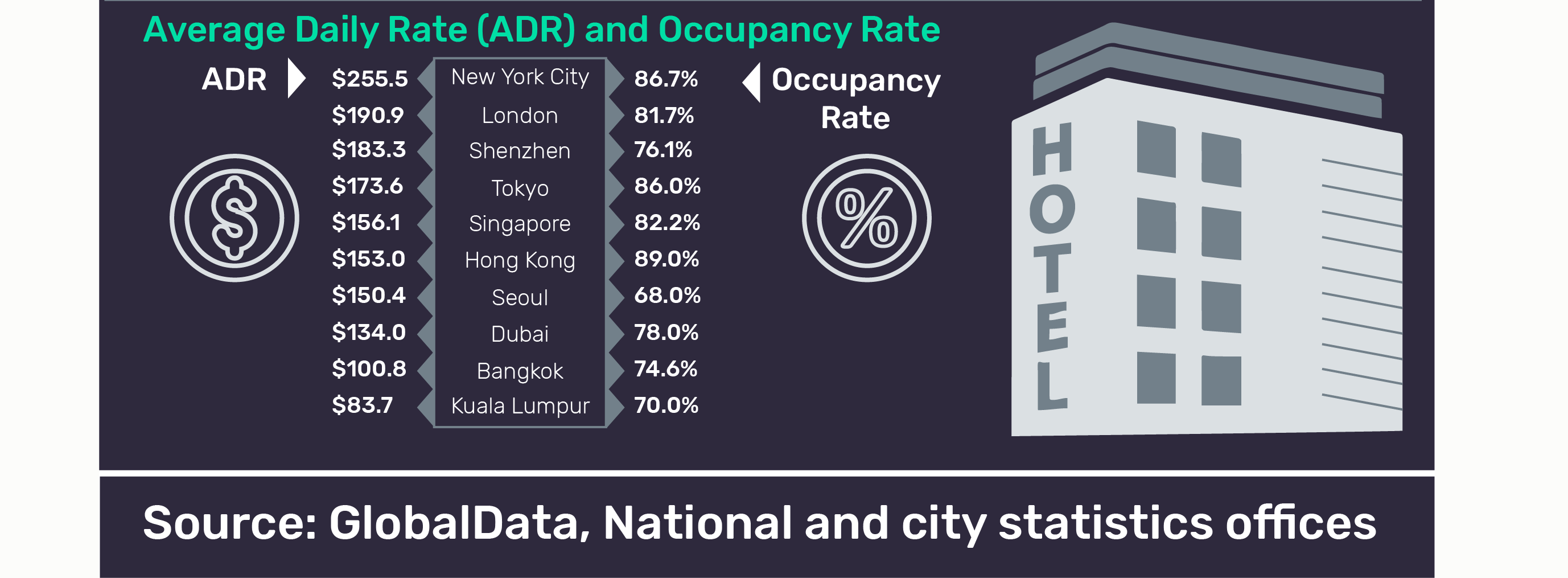
However, despite lower hotel cost, the occupancy rate in most of the Asian cities was around 70%, lower than cities in Europe and America in 2017. This is because the growth in hotel development in recent years is substantially higher than the growth in the number of travelers, hence, a considerable number of rooms remains unoccupied. Exception is seen in Tokyo, Singapore and Seoul, where business purpose tourists helped maintain occupancy rate at more than 80%. In terms of average daily rate (ADR), New York City leads the pack followed by London.
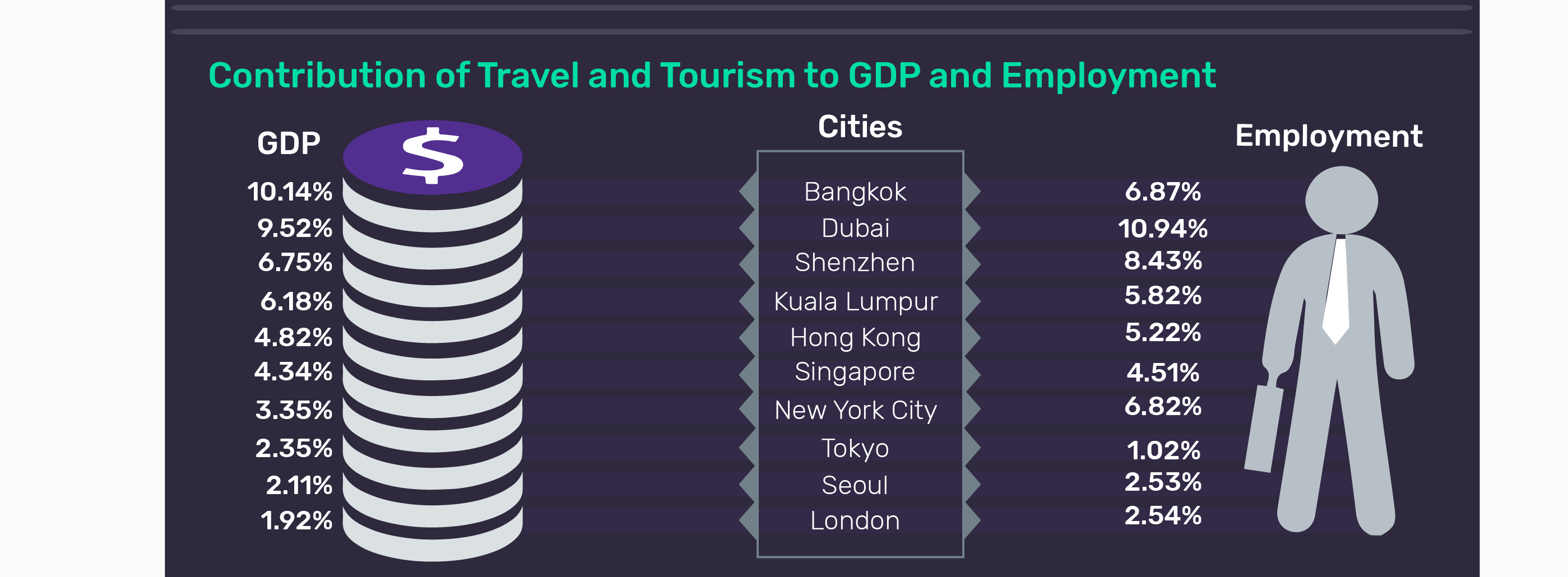
Travel and tourism sector contribution to Asian cities’ economy and employment has witnessed significant growth during the last decade. For instance, Bangkok tourism sector’s contribution to its total GDP increased from 8.2% in 2006 to 10.14% in 2017, according to World Travel & Tourism Council. Similarly, Dubai tourism sector contributed 9.52% to the total GDP and accounted for 10.94% in total employment in 2017.
GlobalData expects Asian cities to continue to dominate the top 10 ranking list in terms of international destinations, primarily due to various initiatives such as implementation of single visa by the respective governments of Association of Southeast Asian Nations (ASEAN) member-states, the advent of low cost carriers and enhancement of transportation by developing highways and railways in Asia.
Boutsioukou concludes: “The rapid growth of tourism sector presents enormous opportunities for urban economies and societies across the world but at the same time it poses substantial environmental, social and economic risks. As a result, key stakeholders across regions should frame and adhere to sustainability principles for the long-term success of the sector.”



You might also like

IHCL signs its fourth Taj Hotel in Dubai
The Indian Hotels Company Limited (IHCL) has announced the signing of a new Taj hotel at the Deira Creek in Dubai in partnership with Ithra Dubai LLC, a wholly owned

Ragasthan, Where You Unbelong
Ragasthan unique and yet somewhat, mercurial, is a 3-daydesert camping festival where music, art, cinema, adventure, culture come together under an interrupted canopy of stars, a majestically stark landscape and

MakeMyTrip launches new Ad campaign for festive season, featuring Diana Penty
MakeMyTrip Limited (Nasdaq: MMYT), India’s leading online travel company, on Monday launched its latest ad campaign ahead of festive season with its brand ambassador – Diana Penty for the MMT Gift cards. The