
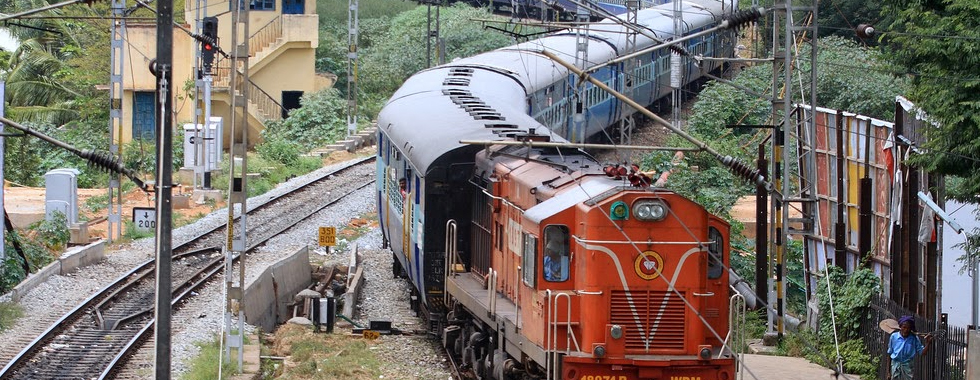
Exemption on service charge on train tickets till September
The service charges on booking train tickets online through IRCTC range from Rs 20 to Rs 40 per ticket.
Train passengers will continue to get benefits of a service charge exemption on tickets booked online till September. The government had waived service charges after demonetisation in November last year to encourage digital modes of booking. The service charges on booking train tickets online through IRCTC range from Rs 20 to Rs 40 per ticket.
To promote digital modes of payment, the government decided post demonetisation that service charge on online booking of train tickets would be withdrawn for tickets booked from November 23, 2016, to March 31, 2017. Later, the government extended the exemption period to June 30.
Now, the exemption on service charge has been further extended till September-end this year, said a senior Railway Ministry official. The government has done this to help passengers and promote payments made through digital modes.
IRCTC, the ticketing agency of the railways, is expected to lose about Rs 500 crore a year due to the exemption. The Railway Ministry has written to the Finance Ministry seeking reimbursement of the loss. IRCTC shares half of the service charge revenue with the railways.
News Source: PTI



You might also like
Oman relaxes its visa rules to attract more tourists from India
Citizens of India, China and Russia nations will be allowed to obtain a non-sponsored tourist visa for Oman. Oman Airports Management Company (OAMC) has announced the revised terms and conditions

Chief Lu Chuan from the Beijing Municipal Commission of Tourism Development opens Sabre TTX conference in Beijing
Chief Lu Chuan, Director of City Image and Marketing for the Beijing Municipal Commission of Tourism Development, welcomed Sabre guests to Beijing as they arrived to participate in the Sabre

Zubin Karkaria honoured with TAAI’s ‘Award of Distinction’
Zubin Karkaria, CEO – VFS Global, and CEO – Kuoni Group, was conferred with the prestigious ‘Award of Distinction’ by the Travel Agents Association of India (TAAI), for his long-standing