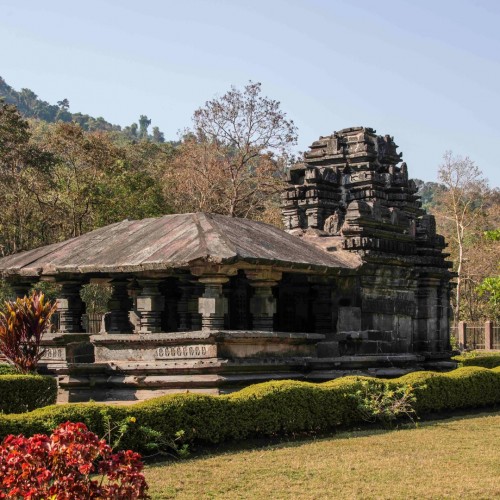

India, Japan & China emerge as most tourism-friendly in Asia
Asia has most improved its tourism-friendliness of all regions, according to the 2017 World Economic Forum’s (WEF) Global Travel and Tourism Competitiveness Index. India’s ranking has jumped 12 points, ranking 40th in the index. Whereas, Japan and China ranked fourth and 15th respectively. Although Spain, France and Germany continued to top the travel and tourism rankings in WEF’s Travel and Tourism Competitiveness Report 2017, Asia stealed the show as the region’s largest economies showed the greatest rise in tourism-friendliness. The report ranks 136 countries across 14 separate dimensions, revealing how well countries could deliver sustainable economic and societal benefits through their travel and tourism sector.
Apart from the ranking, the report also showed how the industry is a force for good in an otherwise largely stagnant global economy. The global travel and tourism sector accounts for 10 per cent of global GDP, growing faster than other sectors and providing one in 10 jobs. Underpinning this growth is the increasing accessibility and affordability of travel, although environmental challenges remain and many countries under-perform in making technological strides.
The top three in the ranking – Spain, France and Germany – are said to have secured their positions due to natural and cultural resources, infrastructure and hospitality services. Traditional strong travel and tourism destinations, including Japan, the United Kingdom (fifth), the United States (sixth), Australia (seventh), Italy (eighth), Canada (ninth) and Switzerland (10th), have also made it in the top 10. Switzerland, however, made a steep fall from sixth to 10th place, while Japan gained most places.
While advanced economies still hold the top spots in the ranking, 12 of the top 15 most improved countries are emerging markets, with Asia’s as exponents. Asia’s largest markets are not only becoming larger source markets but also more attractive destinations. Almost all of the region’s countries improved their rankings. Except Japan, Hong Kong (11th), China, Korea (19th) and Malaysia (26th) also made it to the top 30, while India made the largest leap in the top 50, up 12 places, to land in 40th place.
“The rise of Asia’s giants shows that the ‘Asian Tourism Century’ is becoming a reality. To reach their potential, the majority of countries still have more to do, from enhancing security, promoting their cultural heritage, building their infrastructure and creating stronger visa policies,” said Tiffany Misrahi, community lead – aviation, travel and tourism, WEF.
The 2017 found that the increasingly protectionist global context, one that is hindering global trade, is not holding back international travel. Travel and tourism’s resilience is clear as the industry continued to build bridges between people and stronger visa policies are being developed to enhance security while facilitating travel. In light of the “Fourth Industrial Revolution”, evidence suggested that connectivity has increasingly become a must-have for countries as they develop their digital strategy.
“The increasing importance of demand from emerging markets and technology are changing the travel and tourism sector’s landscape at a fast rate. The capacity of countries to respond to and embrace these structural shifts will determine the future success of destinations,” said Roberto Crotti, economist, WEF.
The report contains detailed country profiles for the 136 economies featured in the study, including a comprehensive summary of their overall positions in the index and a guide to the most prominent travel and tourism competitive advantages and disadvantages of each. Also included is an extensive section of data tables that cover each indicator used in the index’s computation.
WEF produced the report in collaboration with its data partners Bloom Consulting, Deloitte, International Air Transport Association (IATA), International Union for Conservation of Nature (IUCN), UNWTO and the World Travel & Tourism Council (WTTC).
News Source: www.financialexpress.com



You might also like
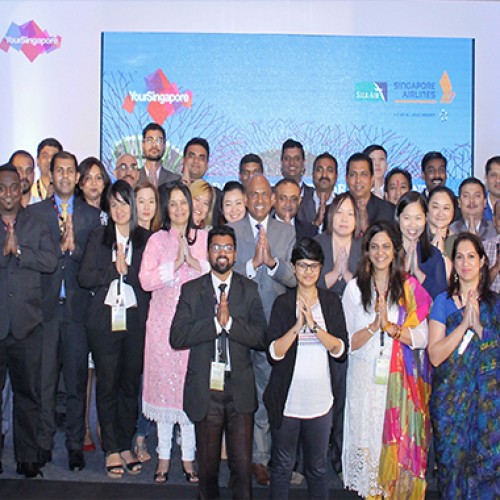
Growing Tourism into Singapore together with travel trade from six (6) cities in India
Singapore Tourism Board and Singapore Airlines Group embarked on a six (6) city roadshow across India, with positive participation from 39 Singapore stakeholders and over 800 in-market travel agents. India
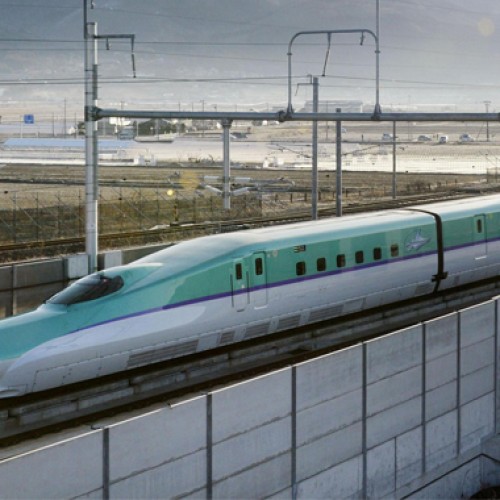
What can you expect from the much awaited Bullet Train?
PM Narendra Modi and PM Shinzo Abe, his Japanese counterpart inaugurated India’s first bullet train project on 14th September 2017. Let’s take a look at what the fuss around India’s
Narendra Modi government providing growth-centric environment for aviation to drive secular growth says Morgan Stanley
As the world’s third-largest and fastest-growing aviation market, India presents one of the globe’s biggest such growth opportunities, benefiting much of the country’s aviation value chain. As the world’s third-largest