
Kerala Travel Mart 2026: Showcasing God’s Own Country to the World
Kerala has never been a destination that fits neatly into a single category. It is where beaches meet backwaters, tea plantations rise into mist-covered hills, spice gardens lead into wildlife forests, and centuries-old traditions coexist with a sophisticated tourism industry. This extraordinary diversity was showcased at Kerala Travel Mart (KTM) 2026, held in Kochi from September 24 to 27.
The 13th edition of the biennial mart brought together tourism businesses, international and domestic buyers, government representatives, hospitality companies, travel professionals and media, reinforcing Kerala’s position as one of India’s leading experiential tourism destinations.
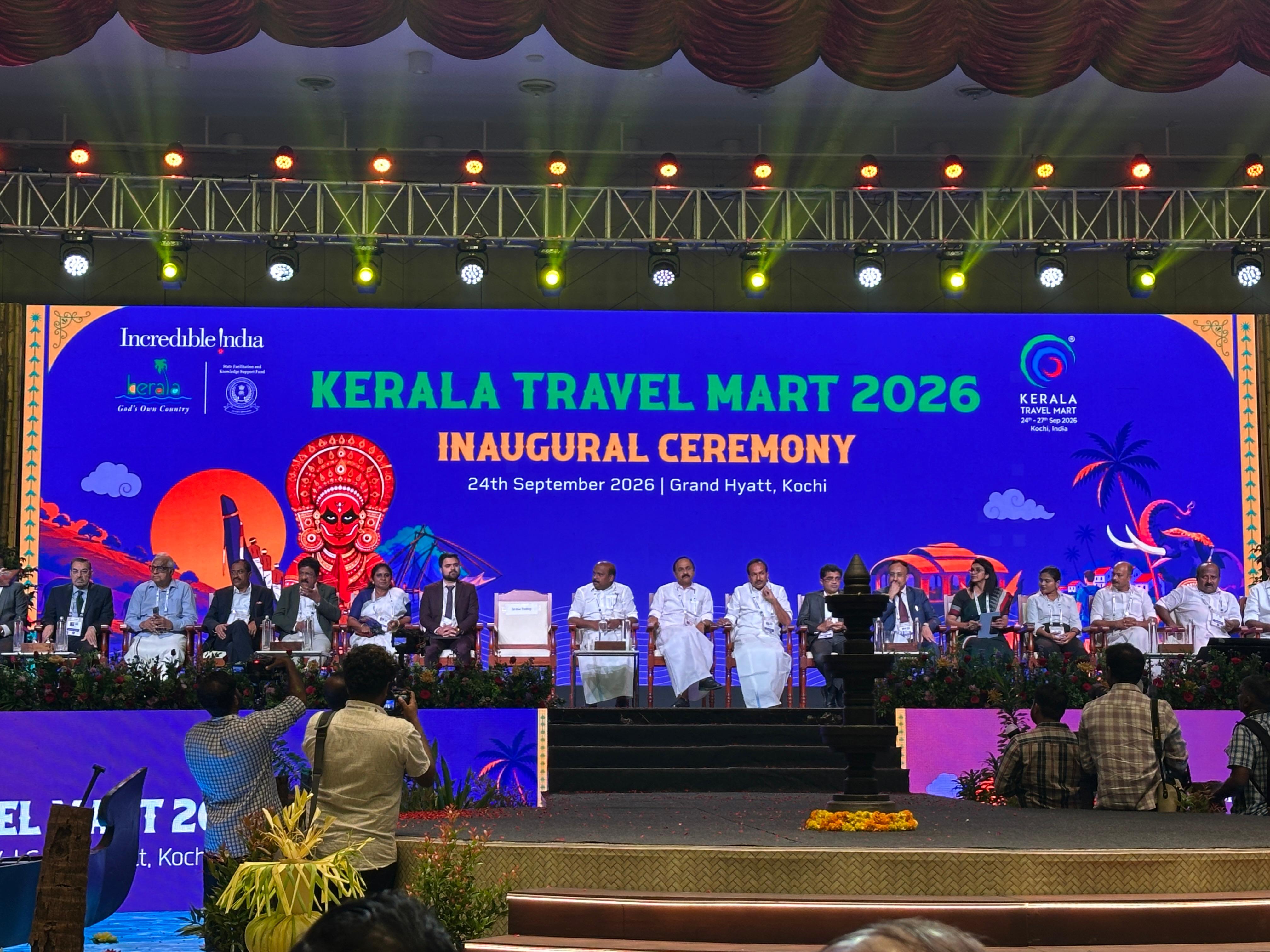 The inaugural ceremony at Grand Hyatt Kochi, Bolgatty, was formally inaugurated by Kerala Chief Minister V.D. Satheesan. P.C. Vishnunadh, Minister for Tourism, Culture & Cinema, presided over the function, while M. Liju, Minister for Cooperation and Excise, attended as Guest of Honour. Suman Billa, Additional Secretary and Director General, Ministry of Tourism, Government of India, delivered the keynote address.
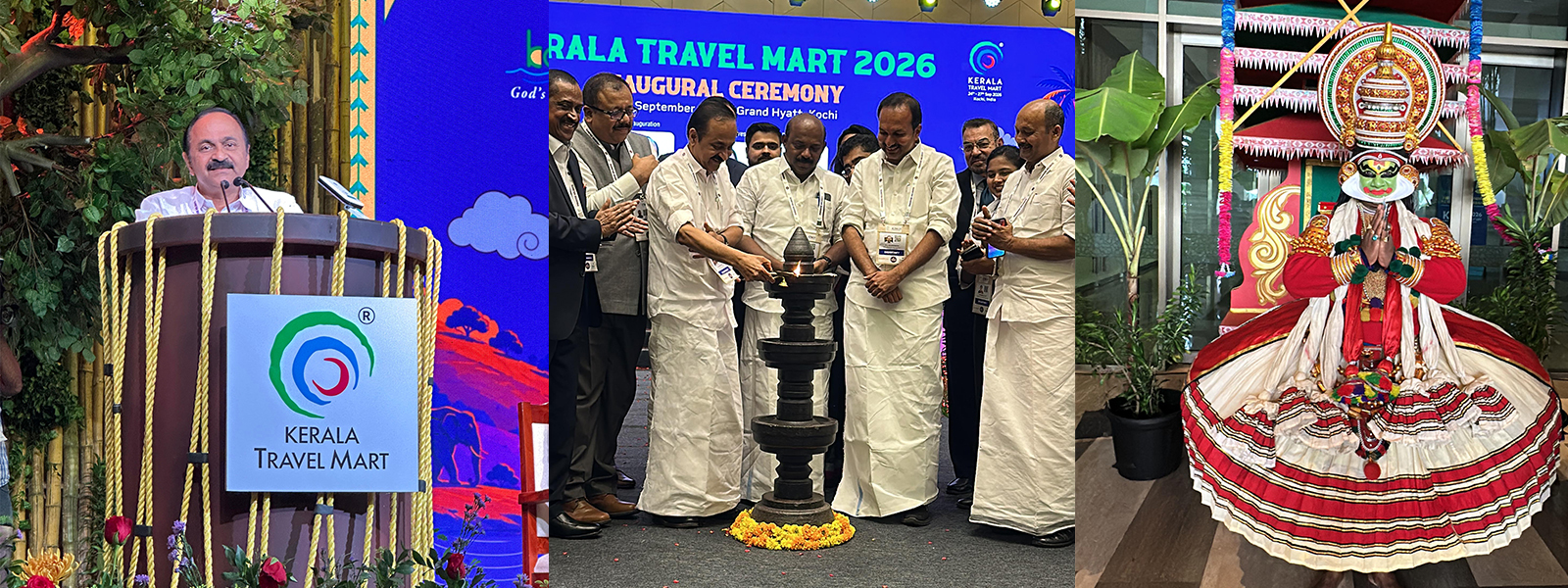 Kerala Tourism Secretary K. Biju presented the state’s tourism vision, while Kerala Tourism Director M. Anjana released the Sellers Directory. The event also brought together senior political, civic and tourism officials, as well as former presidents of the Kerala Travel Mart Society, reflecting the continuity and institutional strength behind KTM. Jose Pradeep, President of the Kerala Travel Mart Society, welcomed the gathering, while S. Swaminathan, Secretary, proposed the vote of thanks. A cultural programme jointly organised by the Department of Tourism and KTM added a distinctive Kerala touch to the opening evening.
A Major B2B Platform
The business programme was the heart of KTM 2026. B2B meetings and the exhibition were held from September 25 to 27 at the Sagara and Samudrika Convention Centres on Willingdon Island.
The mart recorded more than 3,000 buyer registrations, including 1,200 hosted buyers and 300 non-hosted buyers from India and overseas. The exhibition featured 383 seller stalls representing tourism enterprises and 25 government stalls. More than 45,000 business meetings were scheduled, creating opportunities to promote Kerala, build partnerships and attract investment into the tourism sector.
For buyers, KTM offered an opportunity to discover not only established destinations but also Kerala’s expanding portfolio of wellness, responsible tourism, MICE, weddings, adventure, culture, nature and luxury experiences.
The event also generated significant media interest, with 138 media representatives—71 international and 67 national journalists—registered to cover the mart.
A Destination Built Around Experiences
Kerala’s greatest tourism advantage is its ability to offer multiple experiences within a relatively compact geographical area. A visitor can explore historic Kochi, cruise the waterways of Kumarakom or Alappuzha, travel into the tea-covered hills of Munnar, explore the forests of Thekkady and finish with Ayurveda and a beach stay.
Few destinations combine heritage, nature, wellness, adventure, cuisine and leisure so seamlessly.
This diversity is increasingly relevant to international travellers seeking meaningful experiences rather than conventional sightseeing. Kerala’s Responsible Tourism Mission has strengthened community-based tourism involving village life, agriculture, fishing, handicrafts, traditional cuisine and local storytelling. The result is a deeper connection between visitors and the communities they encounter.
The Timeless Magic of the Backwaters
The backwaters remain Kerala’s most recognisable tourism experience, but the product continues to evolve. The waterways of Vembanad and Ashtamudi, along with the state’s canals, lagoons and rivers, can be explored through luxury houseboats, traditional kettuvallams, private boats and intimate canoe journeys.
Travellers can move through villages, observe fishing communities, walk beside paddy fields and experience a quieter side of India. Kumarakom offers an upscale interpretation of the backwater experience, while Alappuzha remains one of the best-known gateways. Kollam and Ashtamudi provide quieter and more immersive alternatives.
The backwaters appeal to different markets: romance for honeymooners, discovery for families, privacy for luxury travellers and rich visual opportunities for photographers.
Heritage That Comes Alive
Kerala’s cultural story is equally compelling. Fort Kochi and Mattancherry reflect centuries of maritime trade and cultural exchange through churches, synagogues, mosques, colonial architecture, cafés, galleries and the iconic Chinese fishing nets.
Yet Kerala’s heritage extends beyond monuments. Kathakali, Mohiniyattam, Kalarippayattu and Theyyam allow visitors to experience living traditions. Festivals such as Onam and Thrissur Pooram, along with Kerala’s celebrated snake-boat races, add further colour to the state’s cultural identity.
For the international travel trade, these traditions create opportunities for specialised culture, heritage, photography, food and festival itineraries.
Ayurveda and the Wellness Traveller
If the backwaters represent Kerala’s visual identity, Ayurveda is one of its strongest international tourism propositions.
Kerala has established a global reputation for Ayurveda, yoga, meditation and holistic wellness. Today’s wellness traveller, however, expects more than treatments. Kerala can combine traditional practices with luxury accommodation, healthy cuisine, nature, yoga, meditation and personalised programmes.
A holiday can combine Kochi, Munnar or Kumarakom with an extended wellness retreat, or be designed entirely around rejuvenation, Ayurveda and slow living. The combination of natural surroundings and established wellness traditions gives Kerala a strong competitive advantage as wellness becomes an increasingly important part of international travel.
From Destinations to Curated Journeys
One of Kerala’s biggest opportunities is the shift from standard packages to personalised, thematic itineraries.
A Luxury Kerala Journey can combine Kochi, Kumarakom, Munnar, Thekkady and Kovalam. A Wellness Journey can bring together Ayurveda, yoga, healthy cuisine and nature. A Culture and Heritage Journey can connect Kochi, Thrissur, Kozhikode and Kannur.
A Slow Kerala itinerary could focus on Kumarakom, Alappuzha, Kuttanad and Marari, while an Adventure and Nature circuit could link Munnar, Thekkady, Wayanad and Bekal.
Kerala’s beaches, backwaters, resorts, heritage venues and cultural experiences also create strong possibilities for destination weddings and celebrations. This flexibility gives the state considerable potential among luxury FITs, MICE groups, honeymooners, wellness seekers and repeat visitors.
Hospitality and Cuisine Strengthen the Proposition
KTM 2026 also provided a platform for hospitality partners to showcase Kerala’s accommodation diversity, ranging from heritage and urban properties to hill resorts, backwater hotels and nature-based stays. Among the partner properties and institutions associated with the event were Abad Fort, Clouds Valley Leisure Hotel, Cardamom County, Backwater Ripples, Bolgatty Palace, Bolgatty Palace and Island Resort, and Kerala Forest Development Corporation.
Kerala’s culinary identity adds another dimension. Seafood, Malabar biryani, appam and stew, puttu, vegetarian Sadya, coconut-based curries and spice-rich preparations offer travellers a cuisine deeply connected to the state’s land and history.
Cooking classes, spice plantation visits, market tours, farm-to-table experiences and meals with local families can transform food from an element of a holiday into a central travel experience.
Taking the Experience Beyond the Mart
The value of KTM continues after the exhibition. Selected participants were offered post-mart familiarisation tours covering 12 major destinations from September 28 to October 3.
Such programmes are particularly valuable for a destination as diverse as Kerala. Buyers may recognise names such as Kochi, Munnar, Thekkady, Kumarakom and Alappuzha, but experiencing the destinations firsthand helps them understand how these places can be combined into compelling itineraries.
A quiet backwater village, a walk through a tea plantation or a traditional cultural performance can transform the way a destination is presented and sold.
KTM 2026 and Kerala’s Global Ambition
The significance of KTM lies in bringing Kerala’s diverse tourism experiences together under one professional B2B platform. The 2026 edition demonstrated the state’s broader tourism proposition—responsible tourism, wellness, MICE, weddings, adventure, culture, nature and luxury alongside its established attractions.
The event also reflected the industry’s growing use of technology, with registration, business meetings, seminars and other processes supported by a new software system and mobile application.
But the numbers and technology tell only part of the story. At its heart, KTM is about relationships: buyers meeting sellers, travel professionals discovering new possibilities and Kerala presenting itself directly to the global marketplace.
Kerala’s enduring appeal does not rest on one attraction but on the way its experiences connect—the slow movement of a houseboat through palm-fringed waterways, the aroma of spices in a traditional kitchen, the drama of Kathakali, the energy of Theyyam, mist over a Munnar tea estate, an Ayurvedic treatment beside the sea or an unhurried conversation in a village.
That is what Kerala Travel Mart 2026 communicated to the global travel industry. Kerala is no longer simply selling destinations. It is selling stories, emotions, wellness, culture, authenticity and experiences that can be tailored to individual travellers.
The opportunity for the travel trade is clear: present Kerala not merely as a list of places, but as a collection of experiences that encourage longer stays, higher-value travel and repeat visitation.
Kerala has already earned its reputation as “God’s Own Country.” The next chapter is about showing the world that it is also a destination for the future of global travel—deeply authentic, remarkably diverse and endlessly experiential.



You might also like
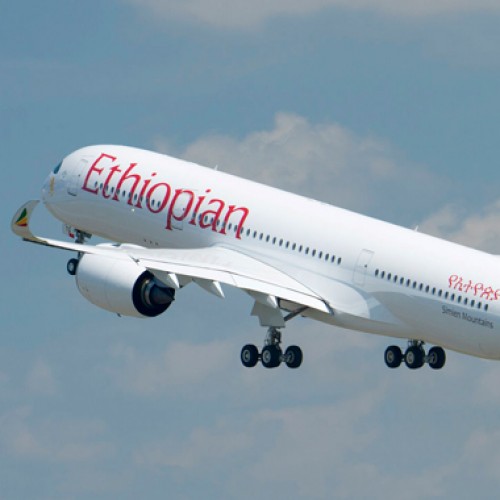
Ethiopian sets yet another year of growth milestones
Africa’s largest Airline Group, Ethiopian Airlines is pleased to announce that it has ended yet another year of fast and profitable growth in 2016, highlighted by fleet and network expansion
World Heritage Day – Explore the Glorious Past with Future Tech
Madhya Pradesh Revolutionizes Heritage Tourism with Cutting-Edge Technology As part of celebrations of World Heritage Day, Madhya Pradesh Tourism is charting significant technological innovations at the state’s UNESCO-listed and tentative

India Announces Extension of e-Tourist Visa scheme to more countries
The e-Tourist Visa (e-TV) facility will be extended to 37 more countries from tomorrow. The total count of countries under the scheme will become 150. The new 37 countries included