

ET GBS 2017: India should invest in the future, not bullet trains says Bibop G Gresta of Hyperloop
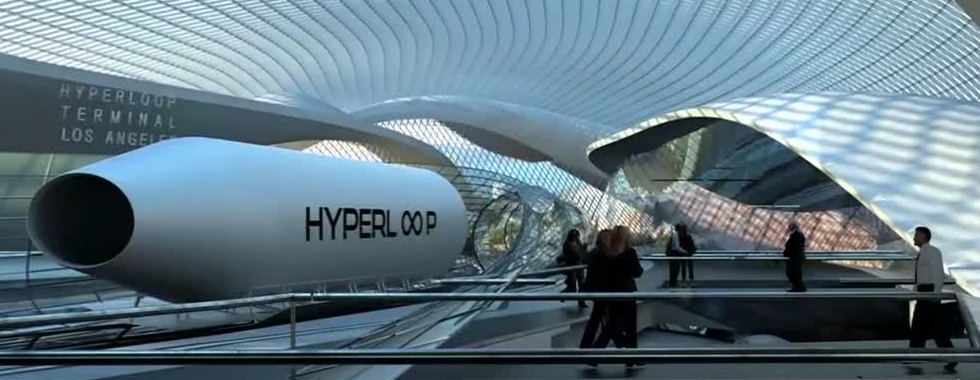
The future of transportation is jet speed and on the ground. Banking on its pathbreaking technology that can make a capsule move inside a vacuum tube, simulating environments similar to outer space, Hyperloop Transportation Technologies (HTT) hopes to revolutionise transport.
Such a system could cover the distance between Mumbai and Pune in less than 40 minutes. HTT co-founder, chairman & chief Bibop officer (as he writes on his card), Bibop G Gresta said, “India has a great opportunity to leapfrog to better modes of transportation.” He believes India should not invest in bullet trains, but invest in “the future,” as bullet trains are noisy, polluting and a liability for future generations.
Gresta, speaking exclusively to ET on the sidelines of the Global Business Summit, said HTT will be doing roadshows next month to raise $120 million. “This will be for investment in India. We have 820 employees and we have worldwide R&D centers.” In India HTT has 20 people—they work at home, 10 hours a week in exchange for stock options (one stock option for every hour of work done). “They work on artificial intelligence, computer engineering, software development and design,” said Gresta.
In recent months, Gresta has had meetings with minister for road transport, highways and shipping Nitin Gadkari and chief ministers of Andhra Pradesh, Odisha, Jharkhand and Maharahstra. “Gadkari is keen on Mumbai-Pune Hyperloop. I believe that’s the first Hyperloop route we could develop,” said Gresta.
Cost per km for developing Hyperloop is $20-40 million. “In India it could be cheaper. Hyperloop cost is comparable with traditional rail but is cheaper than high speed rail (like bullet train),” said Gresta. HTT is also looking at roping in a brand ambassador to create mass awareness about Hyperloop, though Gresta declined comment on any names.
Regulation is the biggest challenge HTT faces. “We are not a train, rail, aeroplane, or a boat we are Hyperloop and that does not exist. That’s the first question that the ministry of rail or the ministry of transport has to look into. In other countries it is a similar challenge and we are discussion how to put a framework in place for the transport departments,” said Gresta.
On the future of transportation, 25 to 50 years from now Gresta said, “cars will be completely self-driving.
News Source: economictimes.indiatimes.com



You might also like

Four Seasons launches new app for Chinese travellers
Four Seasons has launched a dedicated App entirely in Simplified Chinese that has been uniquely designed to suit the preferred user experience of Chinese travellers. Similar to the global Four

Fall in love with the very best of Autumn in Japan
After bidding farewell to the Fireworks Festival of Japan, which concludes in the summers, the blue sky adopts a gentler hue welcoming the Autumn season. This is the best time to

US travel ban ‘not best way to protect’ America says UN
Under the executive order signed by President Donald Trump last Friday, refugees from all over the world will be denied US entry for 120 days. UN Secretary-General Antonio Guterres said