

CAPA report says Domestic traffic in India could grow about 25% in FY2018
CAPA’s comprehensive 200-page India Aviation Outlook Report FY2017/18, to be released in Feb-2017 at the CAPA India Aviation Summit stated that the domestic traffic could grow by nearly 25% in FY2018 and approach 130 million passengers in India. The next financial year is expected to be the third consecutive year of domestic growth above 20%. Growth could be as high as 25% but may be tempered by 3-5% because of the impact of demonetisation.
However, the purchase of air travel using some withdrawn denominations was permitted until the first half of December 2016 which may result in a delayed impact in the first half of FY2018. As of now, it is difficult to fully factor in what the impact may be, if any. The introduction of the GST next year may possibly also have a short-term negative impact on economic growth for a couple of years until more positive results emerge.
Based on aircraft deliveries, competitive dynamics and the positive outlook for the economy, domestic growth at 20% or higher could continue for up to a further two years. The pace of aircraft inductions in FY2018 will be one of the key drivers of traffic growth. This is however subject to deliveries of A320neos proceeding as scheduled and operators being able to deploy the equipment as planned, as some operational challenges have been experienced.
With LCCs taking delivery of the clear majority of narrow body aircraft coming into the market (an estimated 50 out of 65 inductions), their share of the domestic market is expected to rise from around 65% today to reach 75-80% within two years.
The last time that LCCs had a similar market position was in early 2011 when their share stood at over 70%. However, on that occasion it was as a result of a blurred demarcation between the full service and low cost operations of Jet Airways and Kingfisher. Airline business models in the market are better defined today and LCCs will have a clearly dominant position.
International traffic is expected to expand at 10-12% in FY2017 and FY2018, but bilateral restrictions preclude achieving true potential. Most of the ten largest international carriers are achieving year-round average load factors of 90% or higher, indicating constrained capacity. Without India’s unhelpful restrictions, international growth could be in the region of 15-17% per annum which would result in international traffic volumes doubling within five years. However, demonetisation could negatively impact demand for short haul tourist destinations such as Dubai, Singapore and Thailand.
Several Gulf and Asian carriers are seeking additional entitlements to the tune of up to 150,000 weekly seats. Bilaterals have become a key issue in India’s geo-political relations with markets such as the UAE, Qatar, Turkey, Hong Kong, Singapore and Malaysia. The Indian government may only agree to more modest incremental expansion in seats than is being sought by some countries.



You might also like

Atlantis, The Palm launches another thrilling underwater experience ‘Aquatrek by Night’ in the Ambassador Lagoon
Atlantis, The Palm announces the launch of another thrilling underwater activity this summer with AquaTrek by Night. Offering guests an experience of a lifetime, daring divers will descend into the world-famous
Park Plaza Kolkata Ballygunge is now Radisson Kolkata Ballygunge
Park Plaza Kolkata Ballygunge announced its re-branding to Radisson Kolkata Ballygunge – a brand synonymous with outstanding service and comfort. Strategically located in the heart of upscale South Kolkata neighborhood
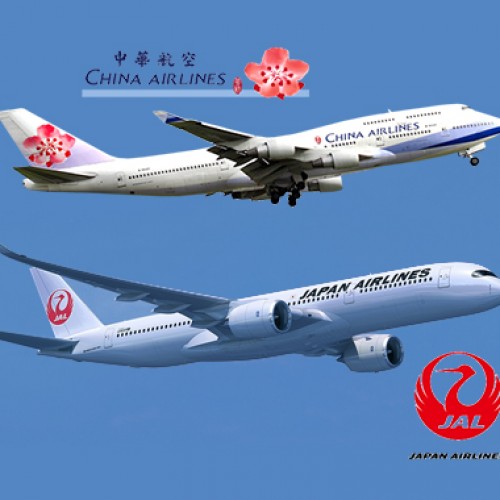
China Airlines expands codeshare deal with Japan Airlines
China Airlines and Japan Airlines today signed a memorandum of understanding to expand their strategic cooperation on cargo and passenger transportation. Due to the popularity of Japan as a travel