




Goibibo introduces new login feature via WhatsApp
In January, the company launched a feature for flight booking and seat selection, giving it users the ability to choose their desired flight seat on WhatsApp.
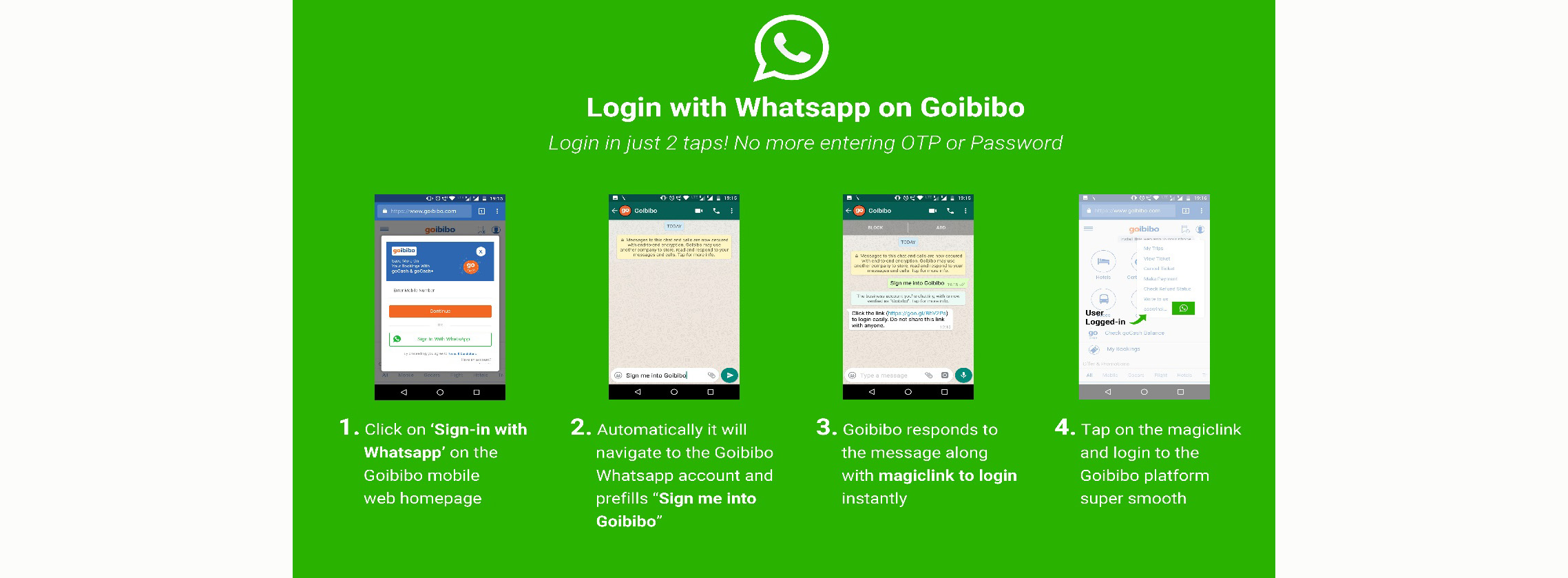
Goibibo, an online travel booking platform, has launched a WhatsApp integrated solution, allowing its users to sign-in to Goibibo on mobile web via WhatsApp. The WhatsApp login authentication will help mobile web users to login without password, keying in OTP or mobile number.
“We are a mobile-first company and we want to leverage the mobile ecosystem to its fullest to make online travel booking experience even more convenient. Given the ubiquitous usage of WhatsApp among Indians, it was a natural choice for us to build this feature to help people access the platform without the fuss of remembering complex passwords and punching in OTPs,” said Anshuman Bapna, Chief Product Officer, Goibibo.
The users have to sign-in with WhatsApp on the Goibibo mobile web homepage. It will automatically navigate to the Goibibo WhatsApp account and prefills ‘Sign me into Goibibo’. Goibibo will respond to the messages along with magiclink to login in its platform.
In January, the company launched a feature for flight booking and seat selection, giving users the ability to choose their desired flight seat on WhatsApp.



You might also like

India’s 1st indigenous train with speed of 160 km/hr set to run by December 2018
A train set, much like a Delhi Metro rake, comprises of many coaches that are individually powered by a propulsion system, eliminating the need for a locomotive. India’s first indigenous

‘The World of The Hunger Games’ now open at Motiongate Dubai
Exceptional entertainment attractions inspired by Lionsgate’s Hollywood blockbuster movie franchise, The Hunger Games. A recreation of the fantastical world of Panem, with the world’s first The Hunger Games inspired attractions,

95 countries honoured at VFS Global’s ‘Diplomats for Peace’
Event held for the first time in India to felicitate efforts of diplomatic community in promoting peace through tourism Representatives from 95 countries around the world were felicitated at the unique