
Hospitality’s Most Underestimated Asset: How Domestic Tourism Gives India a Competitive Edge Over APAC Markets
By Amrita Gupta
India’s hospitality landscape has undergone a quiet shift in the last few years. The perception that international arrivals determine the success or credibility of a destination has slowly begun to fade. As disposable incomes rise and aspirations evolve, domestic travel is shaping into a powerful engine of growth. For a market often compared with Thailand, Singapore, Malaysia and other APAC peers, the decisive advantage today lies not in competing for the same foreign traveller pool, but in building on a far deeper and more reliable base of Indian tourists.
 India Travels Inward, Not Outward
One of the most overlooked strengths of Indian hospitality is the sheer size and consistency of domestic tourism. While inbound travel is desirable from a branding lens, domestic tourism is the country’s economic anchor. According to government estimates, India recorded close to 1.73 billion domestic tourist visits in 2022, a number experts believe will continue to rise as connectivity improves and leisure preferences widen. Even if a portion of these movements converts into organised stays, the backbone of India’s hospitality growth becomes clear.
In contrast, APAC markets remain far more dependent on international arrivals. Thailand, for example, receives a substantial share of its tourism revenues from foreign travellers. That structure makes such markets more vulnerable to global shocks, currency swings and geopolitical surprises. India’s internal circulation of tourism demand offers an insulation that many of these destinations cannot replicate naturally. It may look less glamorous on a chart, but the stability is unmatched.
The interesting part is how this shift is starting to express itself. Travel decisions are now less seasonal, less occasion-driven. Workations, long weekends, wellness retreats and cultural getaways are creating demand throughout the year. The middle class is increasingly comfortable spending on stay experiences that are not driven purely by necessity but by aspiration.
Beyond Metros: Momentum in Tier II and Leisure Belts
While traditional tourist hubs like Jaipur, Goa, Udaipur and Kochi remain popular, the next wave of momentum will come from India’s Tier II belts and specialised leisure zones. Cities and towns that once lacked branded hospitality offerings are now seeing rapid conversion. Better roads, regional airports and digital discovery platforms have pulled new travellers into these circuits.
This is the space where India’s hospitality sector finds a genuine competitive edge over APAC. The country is building not just coastal or capital-centric travel patterns, but diversified regional tourism. Many domestic destinations are no longer dependent on a narrow theme or season. A single state can drive wildlife, heritage, pilgrimage and wellness tourism simultaneously, creating depth most APAC markets cannot match.
Then there is consumer behaviour. Indians tend to travel in groups, extended families or multi-generational clusters. One trip supports multiple room nights, food services, retail spending and activities. That ripple effect creates a larger revenue base per booking, often far higher than a single or couple traveller profile common in other Asian markets.
Hospitality Is Not Just About Hotels Anymore
The meaning of hospitality itself is expanding. Travellers expect spaces that blur relaxation, work, recreation and cultural immersion. Increasingly, hotels are no longer viewed as neutral shelters, but as social ecosystems. Wellness centres, local food offerings, curated art, community engagement activities and region-specific experiences are becoming part of the value proposition.
There is also a sustainability angle to this shift, though it shows up in small, everyday ways rather than grand statements. When people travel within India or within their own region, it cuts down on long flights and imported supplies, and that changes the footprint of the industry. The money they spend usually stays close to where it is earned.
One good example to illustrate this is Jaipur. A good tourist season in this city supports more than hotels. Farmers supplying vegetables, taxi drivers, guides, craft sellers, and even local sweet shops feel the difference. Many of these businesses depend mainly on Indian visitors, not international arrivals. It is a circle that feels informal but powerful. Money moves from visitor to neighbourhood, sometimes through small interactions that never feature in tourism reports. Tourism, in that sense, becomes something closer to local value creation than just heads in beds.
The Economic Edge
A stronger domestic base gives India pricing stability and long-term forecasting ability. APAC economies that lean on foreign arrivals often see sharp revenue swings when flight routes change or outbound markets cool. India’s internal tourism demand cushions hotels, resorts and alternative stay formats against such unpredictability. That stability encourages investment in hospitality infrastructure, which then feeds into regional employment, micro-business creation and skills development.
There is also a sustainability layer hidden within this shift. Domestic tourism reduces carbon footprints associated with long-haul travel and supports local supply chains. The impact flows into agriculture, transport, crafts and regional cuisine. Hospitality becomes a form of local economic regeneration rather than just demand fulfilment.
India’s tourism story will continue to evolve. International arrivals will rise, and they will remain important, but domestic travel will shape the country’s long-term hospitality identity. It is the quiet, constant force behind room growth, destination creation and occupancy resilience. The APAC comparison may flatter or distract, depending on the year, but India’s strength lies in a model that does not need to mirror others.
Some advantages are built slowly and silently. Domestic tourism happens to be one of them.
The Author is Director of Manglam Group and CEO of Manglam Spa and Resorts.
—



You might also like

Regent Seven Seas cruises to return to Turkey
Regent Seven Seas Cruises (RSSC), the most inclusive luxury experience™, has announced it will be returning to Turkey with eleven itineraries departing in 2019. This captivating country has long been

Atlantis, The Palm introduces a Kung Fu Yoga Special contest
Win a 3 Night stay in Atlantis, The Palm and return flights to Dubai Jackie Chan’s latest film Kung Fu Yoga, which was filmed in Atlantis premieres on 3rd Feb
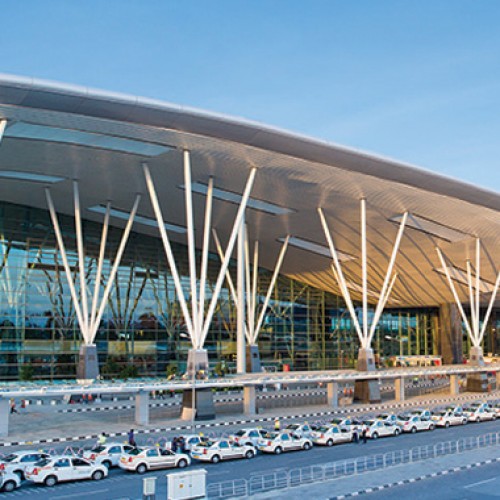
Bengaluru Airport will be closed for 6 hours every day between February 19 and April 30
The Bengaluru Kempegowda International Airport is set for a major revamp and will cease its operation during the day time for two-and-a-half months between February and April. As per NOTAM