IIT Roorkee is developing drones to make your train journey safer
The Indian Railways will soon start deploying drones to monitor rail tracks, a step that could help the national transporter leap forward on the safety aspect which is an area of special attention for the government.
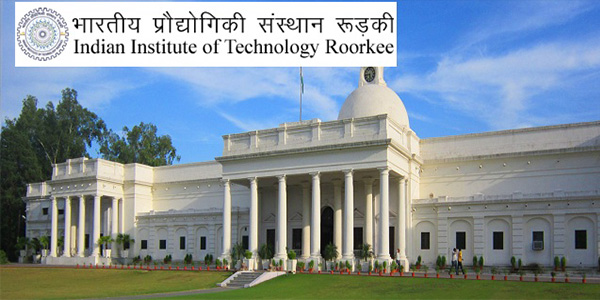
Under an initiative of the telecom industry and the railways, Indian Institute of Technology in Roorkee has developed the drones which are currently being tested on the tracks around the Uttarakhand town.
“The Indian Railways is in the advanced stages of considering deploying unmanned aerial vehicles to monitor rail tracks using the technology developed by IIT-Roorkee,” said Anurag Vibhuti, deputy director of TCOE India.
TCOE (Telecom Centres of Excellence) is a public-private initiative in the telecom sector that works with the academia on new technologies. Under it, the railways’ broadband services arm, RailTel Corporation, has partnered IIT-Roorkee to develop the drones that will help automate rail track monitoring, which currently is a labourintensive process.
The drones will work alongside and may eventually replace the conventional system, which makes use of either human inspectors or trolleys pulled by workers and is a tough job during extreme weather and in remote places. Most train accidents are blamed on human error and improper monitoring of tracks. Use of drones to monitor tracks and modern technologies to analyse the data they capture is expected to reduce the chances of error.
The railways, in fact, plans to expand the use of drones to more functions, including monitoring of projects and other infrastructure as well as relief and rescue operations and crowd management. It has already tested the devices for project monitoring in some places.
“It has given directions to zonal railways to procure such (drone) cameras. This is in line with the government’s desire to use technology including artificial intelligence to enhance safety and efficiency in train operations,” said RD Bajpai, a spokesperson for the Indian Railways. The Jabalpur, Bhopal and Kota divisions already used this technology for monitoring railway works, he added.
For IIT-Roorkee, the next stage of the project is utilising artificial intelligence and Big Data to analyse the images and information captured by the drones and make the monitoring work more real-time to predict faults on tracks, Vibhuti said.
Dharmendra Singh, a faculty member at IITRoorkee and coordinator for the project at the institute, said the UAV-based monitoring system is cost effective and easily implementable. “Our system makes use of drones, which capture videos as well as still images of railway tracks,” he said. These images are processed to find various kinds of faults as well as ensure proper working of the tracks.
In the pilot mode, IIT-Roorkee analysed the gauge distance (the distance between two rail tracks) from the images captured by the drones, using various computer vision and image processing techniques. “Further, we are doing a check for components of the railway tracks like fishplates, fasteners, sleepers, etc. to ensure that no component is missing,” said Singh.
This method includes the automated task of monitoring railway tracks and their component and analysing the images using computer-vision technology. “This is highly accurate and precise in detecting faults on the railway track,” Singh said. “It is safe to say that our system can greatly reform the present methods being employed for railway track maintenance.”
The Indian Railways, which has one of the largest rail networks in the world, has historically been among the worst performers on the safety aspect, though the number of accidents has fallen in recent years. Recent government data show that there were 54 derailments in 2017-18, compared with 78 in the previous year and 141 in 2010-11. In 2016-17, 607 people were injured or killed in train accidents, while that number has come down to 254 the following year.
“This (drone) project was proposed by the Indian Railways to RailTel but as RailTel did not have much R&D expertise, so it partnered with IIT-Roorkee,” said Vibhuti.
At the institute, RailTel sponsored the centre of excellence under TCOE. The centre is doing research & development in the field of information technology, communication and broadband applications. IIT Roorkee is considering seeking patent for this technology.



You might also like
Hyperloop One comes to India but don’t dream of 1-hour Delhi-Mumbai journey yet
Hyperloop One, a company that is building what it calls the next generation travel infrastructure, is now here in India. The company held a media event in Delhi on Tuesday

Affordability driving rapid increase in French tourists to Portugal
Tourism from France to Portugal is booming, with annual visits increasing from 1.2 million in 2013 to 1.5 million in 2017, and projected to hit 2 million by 2022, according
WAT announces unique travel experiences to Cuba and Mexico
World Architecture Travel (WAT) a global network for guided architectural tours brings a unique travel experience to Mexico and Cuba. Themed ‘Time among the Maya’, the tour coordinated by a