Indian Railways considering Metro-like self-propelled trains for high-speed corridors
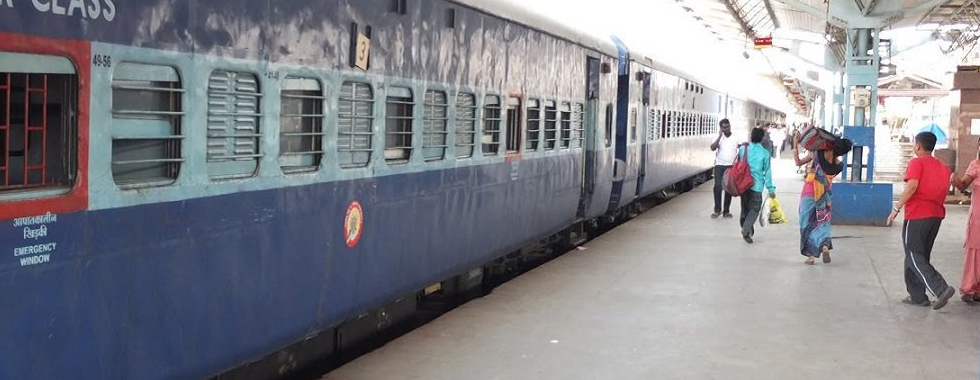
The Indian Railways is exploring the idea of using self-propelled trains like those used in Metro systems to realise its high-speed corridor dream.
Racing against time to bring a network of “high-speed corridors” on track, the Indian Railways is exploring self-propelled train sets similar to those used in Delhi Metro. This technology, experts say, will not only achieve faster acceleration of up to 160 km per hour, but also put in place advance protective measures like electro-pneumatic braking system to improve passenger safety.
Senior railway officials said the prototype of the train is being manufactured at Integral Coach Factory in Chennai and the first two sets will be ready by March 2018. The trial runs will begin soon thereafter. A top railway ministry official told Mail Today that the Chennai coach factory has already issued a global tender for technical support for the new trains.
MADE IN INDIA
“These self-propelled trains will be made in India. This will reduce the manufacturing cost to nearly half the cost of importing them from foreign countries. Apart from the passenger comfort, emphasis will be on safety of the trains while they run at high speed,” the official said.
The Chennai factory is looking to equip the train sets with improved mechanical couplers and modern bogies that will support its movement at high speed. “This will help keep the jerks and vibrations at bay,” officials associated with the project said.
“The train will have fully suspended traction motors, pneumatic secondary suspension and anti-roll bar. The brake system will be Electro Pneumatic, which will reduce the braking distance, so that full speed potential of the train can be harnessed,” the officials said.
The new technology, which comprises electro-pneumatic (EP) brake system, has an edge over the conventional air brake mechanism in terms of speed of control and quick on-vehicle reaction times.
The EP brake takes less time to respond giving the loco pilot instant control of the entire train. Experts said it was originally designed for subways or metro trains but over the years the system has been widely used in leading train networks across the globe. Its speed of operation also makes it ideal for automatic train operation (ATO).
For operating trains at the speed of 160 km per hour, the biggest challenge before railways is to modify its existing tracks. This includes removing sharp curves and barricading along the route so that trains can attain high speed without any physical obstructions.
MODI’S DREAM PROJECT
A network of high speed corridors is the dream project of Prime Minister Narendra Modi but so far only Delhi-Agra corridor has become operational. Gatimaan Express, India’s fastest train that runs at the speed of 160 km per hour, runs on the corridor.
Eight other semi-high speed corridors have been proposed across the country but these are still in the conception stage. Railways has also formed a separate entity, High Speed Rail Corporation (HSRC) for speedy execution of these projects.
The railways has also started the work to convert two of the busiest routes — Delhi-Mumbai and Delhi-Howrah — into semi-high speed corridors. The maximum speed of trains on these rail routes will increase by 30 km per hour that will cut short the travel time to Mumbai and Kolkata by up to 5 hours. As per the plan, the top speed of Rajdhani Express on these routes will be increased from the current 130 kmph to 160 kmph. Railway Minister Suresh Prabhu has instructed railway officials to execute the two projects on priority basis.
Railway Ministry has appointed its engineering wing RITES as a consultant to execute the project in the next three years. The project is a part of ‘Mission Raftar’ envisaged by Railway Minister Suresh Prabhu under which average speed of the trains will be increased by up to 25 km per hour.
News Source: indiatoday.intoday.in



You might also like
Singapore Tourism Board connects with travel trade in three cities
2017 was a record year for Singapore Tourism Board – India jumps to third largest source market for visitors into Singapore India has moved up to the third position from
13.4% growth in Foreign Tourist Arrivals in March, 2018 over March, 2017
68.8% growth in Foreign Tourist Arrivals on e-Tourist Visa in March, 2018 over March, 2017 Ministry of Tourism compiles monthly Foreign Tourist Arrivals (FTAs) & FTAs on e-Tourist Visa on

Finland’s centenary of independence is being celebrated in an epic way throughout the world
The centenary of Finland’s independence culminates on Finland’s Independence Day, 6 December 2017. The story of the 100-year-old Finland is extraordinary and rests on the values cherished by the Finns: democracy,