
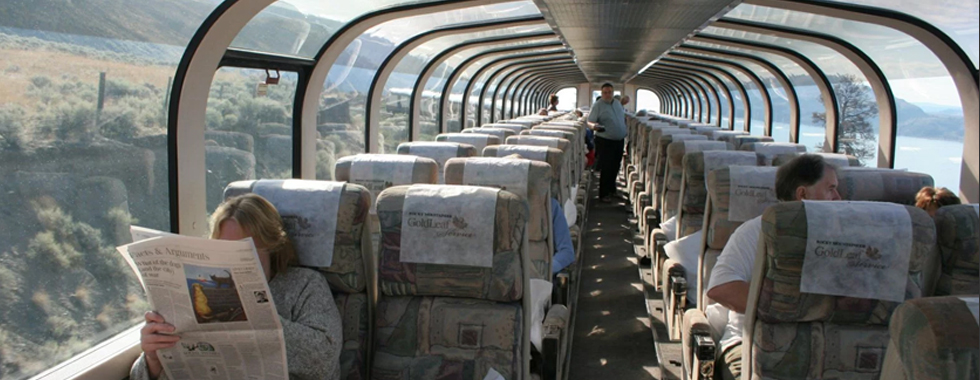
Indian trains to get glass ceilings
First carriages to be rolled out in Kashmir Valley
India’s rail operator is planning to introduce carriages with glass ceilings on scenic routes.
The Press Trust of India (PTI) reports that the new luxury carriages are currently being developed at a factory in Tamil Nadu, and the Indian Railway Catering & Tourism Corporation (IRCTC) expects them to be operational by the end of this year.
According to IRCTC chairman & managing director, AK Manocha, the objective is to promote Indian rail tourism and attract more upscale tourists from both home and abroad.
“The first coach will be tagged in a regular train in the Kashmir Valley while the other two will be part of some train careening through the picturesque Araku Valley in Visakhapatnam,” Manocha was quoted saying by the PTI.
“There are some trains with glass ceiling in foreign countries, like Switzerland, which enjoy the patronage of tourists. We believe such coaches would also give a fillip to rail tourism in India.” As well as glass ceilings, the new carriages are billed as having more legroom and modern “infotainment” systems.
News Source: traveldailymedia.com



You might also like

SriLankan Airlines launches operations at Terminal 1, Velana International Airport
SriLankan Airlines officially transitioned its operations to Terminal 1 at Velana International Airport, Malé, effective 17 December 2025. To commemorate the move, Maldives Airports Company Ltd (MACL) hosted a ceremonial
Air taxis in India a reality soon: Civil Aviation Minister
The drone policy unveiled last month will make air taxi operation in India a reality soon, Minister of State for Civil Aviation Jayant Sinha said. The minister took to twitter
Thomas Cook India receives top honour at The French Ambassador’s Travel Awards
Conferred with the Diamond Award for highest number of visa issuances in India for the third time in a row Thomas Cook (India) Ltd., India’s leading integrated travel and travel related