Narwar Fort reminds the story of Nal and Damyanti
Words by Suman Bajpai
Visiting archaeological sites often gives me goosebumps as remnants start magically uncovering the history. These sites make you think and admire how rich and beautiful our past and heritage were, and how skilled our architects and artists were. The sculptures, every carving on the walls, ceilings, and doors, the forts, the palaces, and the monuments reflect their precision.
So, while visiting Narwar Fort situated in the Shivpuri district of Madhya Pradesh, I was very excited as a history admirer. When I was told that it has more than 260 steep steps, I was not sure whether I would be able to climb them. But I did, and descending was as difficult as climbing.
Narwar is a historic town, and the Narwar Fort is just east of the Kali Sindh River and is situated at a distance of 42 km from Shivpuri. It is mentioned as Nalpura (Nala’s town) in many medieval Sanskrit inscriptions. Tavernier, in his travelogue, describes Narwar “as a large town on the slope of a mountain or a steep scarp of the Vindhyan range, above which there is a kind of fortress, and the whole mountain is surrounded by walls.
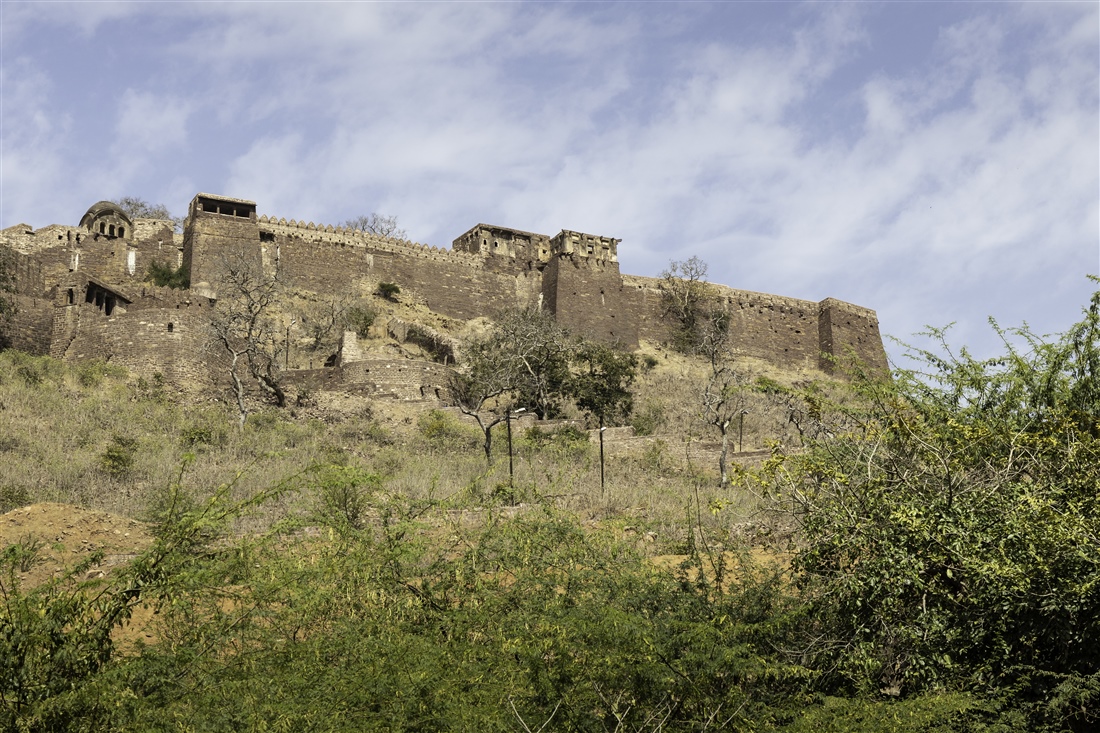
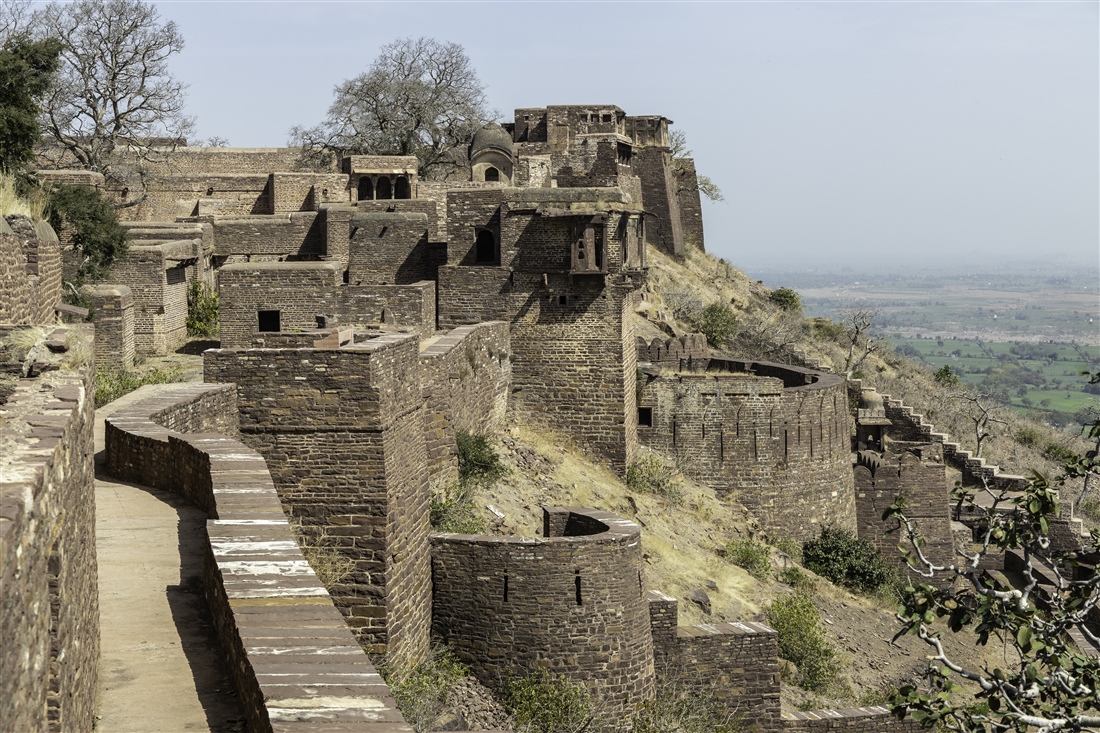
Narwar Fort, situated atop an irregular hill, is about 500 feet above ground level and spread over an area of 8 km on a steep scarp of the Vindhya Range. The Kachwaha Rajputs are said to have built the fort when they occupied Narwar in the 10th century. Kachwaha, Parihara, and Tomara Rajput held Narwar successively from the 12th century onwards until it was captured by the Mughals in the 16th century. It was conquered by the Maratha chief Scindia in the early 19th century.
The trace of Narwar town is found in the Mahabharata, and it was the capital of Raja Nala. And legend says that Raja Nala built this fort for his beloved Damyanti, whose love story is famous.
As I had already mentioned, the climb is quite steep, and as many curves appear, it seems that we have reached the fort, but then again, you will find steps after a small piece of flat surface. Sadly, there are no remains from the Hindu period at Narwar Fort except for a few inscriptions. All the Hindu structures were destroyed by Sikandar Lodhi in 1508 AD. Sikandar’s men remained at the fort for six months, smashing the temples and building mosques and other Muslim structures.
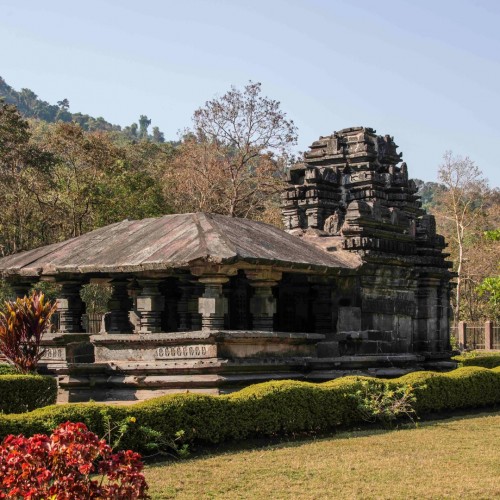
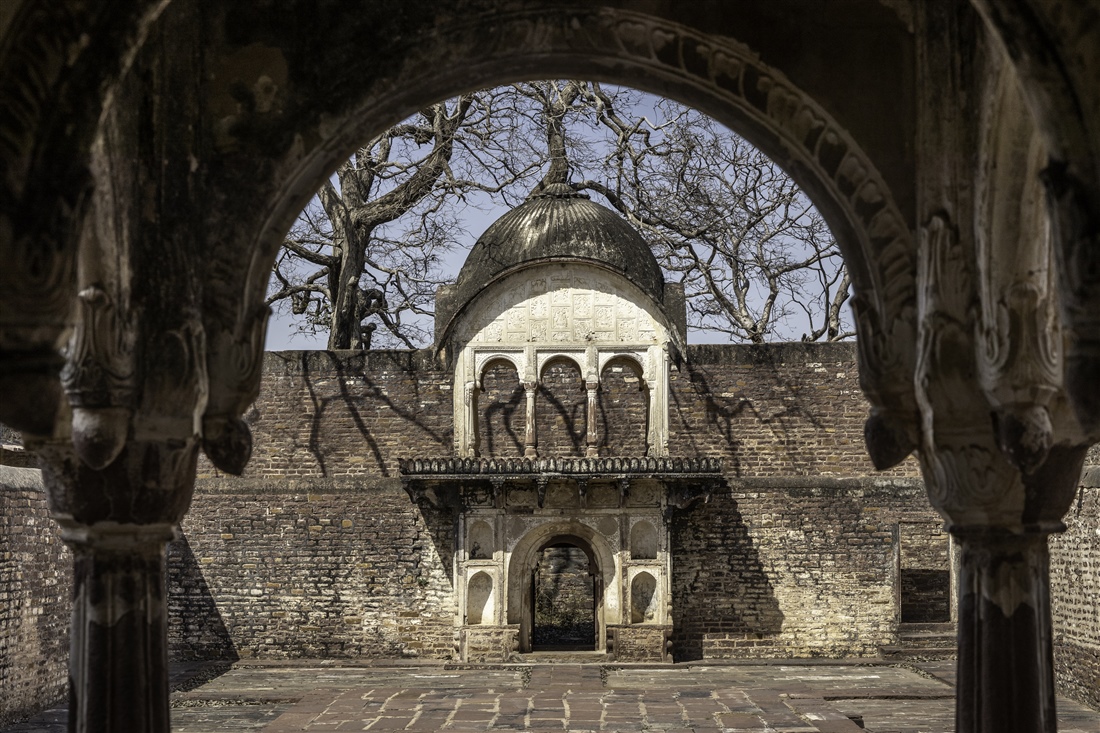
At the entrance of the fort, in a small letter, it is written ‘Chhip Mahal’, which clearly has carved pillars that have been reused from a circa 11th-century Hindu temple. Other structures that are here are recorded as Hawa Paur Mahal, Koriyon ki Haveli, Ladau Bangla, Chhip Mahal, Flour Mill or Chakki Mahal, Phulwa Mahal, Rani Damyanti Mahal, Rawa Parewa Mahal, Kachheri Mahal, Sunheri Mahal, Ram Janaki Temple, Catholic Chapel, and Sikander Lodhi Mosque.
The interior of the fort is divided by cross walls into four ‘ahata’ and ‘dholaahata’. The architecture of the fort and palaces is Rajput in style, with a flat ceiling, fluted columns, and multifold arches. The fort can be described as the neck, head, and bill of a duck. The head or central portion is called Majh Mahal, or middle quarter, and also Bala Hisar, or ‘Citadel,” as it commands the view of the entire fort. The neck, or northern quarter, is called Madar Hata as it contains the shrine of the famous saint Shah Madar. The duck’s bill, or south-eastern quarter, is called Dulha Kot. The whole circuit of the walls is about eight kilometers. The principal entrance to the fort lies in the hollow forming the duck’s throat.
Narwar Fort is a complete fort—a challenge to climb, full of surprising features—and straddles across eons from Mahabharat to Tatya Tope.



You might also like

Diwali Celebrations in Different Regions of India
Diwali, also called Deepavali or the “festival of lights”) is an ancient Hindu festival. It is one of the largest and brightest religious festivals in India. The festival of Diwali
Celebrations for Jordan Tourism Board as month-long Jordan Food Festival & Photo Exhibition kicks off
Come, tantalize your taste buds with the Flavours of Jordan and soak in the stunning photos of this ancient civilization! The Jordan Tourism Board in association with Zerzura is holding
Jumpin Heights to participate in 2018 First edition of Adventure Sports Expo
Jumpin Heights, India’s first Extreme Adventure zone in Rishikesh in Uttarakhand, will be participating in the First edition of Adventure Sports Expo. The three-day event will be held on 27-29 January,