

New aviation policy has fare cap for 1-hour routes: Rs 2,500
If approved by the Cabinet, the policy will enable new carriers like AirAsia India and Vistara — both operated by the Tata Group via joint ventures with foreign carriers — to operate internationally.
AN all-inclusive airfare not exceeding Rs 2,500 per passenger for one-hour flights to promote regional connectivity will be a “game-changer” in the new national civil aviation policy to be submitted to the Union Cabinet on Friday, Civil Aviation Secretary Rajiv Nayan Choubey told The Indian Express.
“The policy should be out in two weeks. We have finalised the draft and it will be sent to the Cabinet tomorrow. There were 22 items in the policy. We have now broadly evolved a consensus on these issues,” Choubey said.
Sources said the government may also replace the controversial 5/20 rule — a minimum five-year domestic experience and 20 aircraft for local carriers to fly abroad. They added that it is likely to be replaced with a 0/20 norm — zero-year experience and minimum 20 aircraft or 20 per cent capacity deployed domestically, whichever is higher.
If approved by the Cabinet, the policy will enable new carriers like AirAsia India and Vistara — both operated by the Tata Group via joint ventures with foreign carriers — to operate internationally. Choubey, however, said he could not comment on the norm, as the policy was yet to be made public.
Sources said that consensus emerged during inter-ministerial consultations on thorny issues in the much-awaited policy, such as conditions related to permission for domestic airlines to fly abroad, the open sky policy and the regional connectivity scheme for non-trunk routes.
“Open sky is certainly one of the items being proposed to the Cabinet and the Cabinet will take a decision on that. Any change in open sky policy will lead to change in structuring of the Air Service Agreements (ASA) with other countries,” said Choubey.
India has signed ASAs or bilateral traffic rights with 109 countries covering aspects relating to the number of flights, seats, landing points and code-share.
In its initial draft policy released in October 2015, the civil aviation ministry has proposed to enter into an open sky agreement on a reciprocal basis with SAARC countries and countries with territory located entirely beyond a 5,000-km radius from New Delhi — a proposal that was criticised by airline industry.
Choubey said the policy’s thrust is also on promoting regional connectivity. “The regional connectivity scheme in the civil aviation policy should be a game-changer. The policy discusses the revival of airports and construction of no-frills airports. There is also the provision of keeping fares in the region of up to Rs 2,500 per hour of flying on the regional routes,” he said.
News Source : indianexpress.com



You might also like
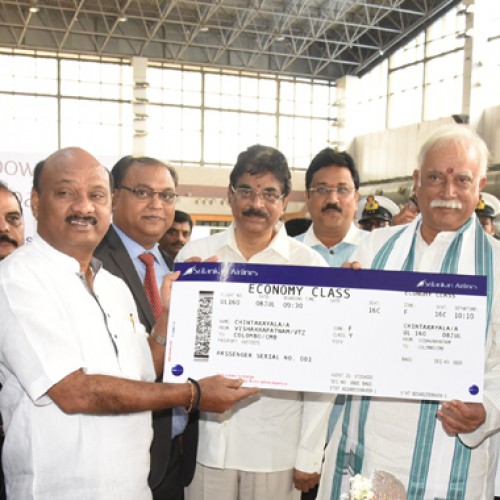
SriLankan Airlines connects Visakhapatnam, Hyderabad and Coimbatore to the world
SriLankan Airlines is pleased to announce the launch of new services from today to Coimbatore, the second largest city in India’s southern state of Tamil Nadu. Accordingly, the airline will

Via.com UAE launches Cash on Delivery service
Customers can now make travel bookings and pay by cash against travel bookings! Understanding the need for Cash on Delivery (COD) service in UAE where a majority of customers are
Cruise service to start between Goa and Mumbai from next month
Cruise line services between Goa and Mumbai will begin by the first week of December and hotels are requested to construct floating jetties to facilitate ferrying tourists to their resorts,