
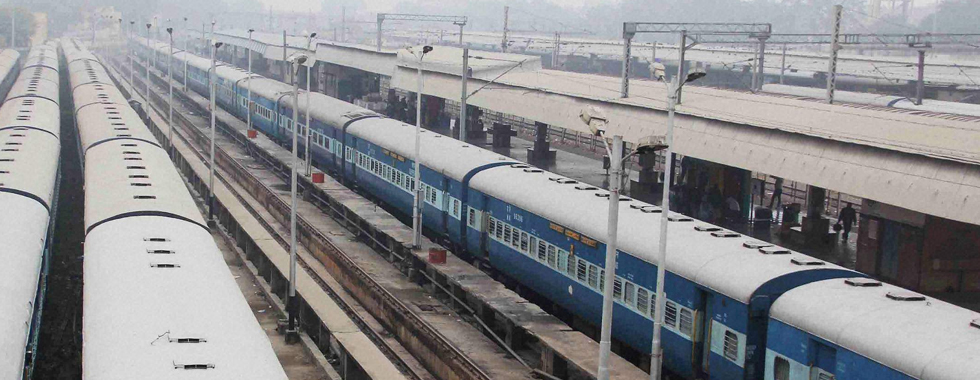
No service charge on train e-ticket till June 30
Passengers will continue to get benefits of service charge exemption on train tickets booked online till June 30. In order to help passengers and incentivise payments made through digital modes for booking of reserved tickets, service charge on online booking of train tickets was withdrawn for the tickets booked from November 23, 2016 to March 31, 2017.
The exemption facility effective till March 31 this year has been extended further to June 30, said a senior railway ministry official. Railways received instructions from the Ministry of Information and Technology advising the public transporter to extend the incentives at least till June 30. The service charges on booking train tickets online through IRCTC ranges from Rs 20 to 40 per ticket.
The government waived the service charges after demonetisation in November last year to encourage digital modes of booking. Approximately, an amount of Rs 184 crore has not been realised from passengers on account of service charge and service tax thereon on reserved tickets booked online from November 23, 2016 to February 28, 2017, according to railways data.
News Source: timesofindia.indiatimes.com



You might also like

Harish Chanra, GM-IT, Sarovar Hotels named Travel & Hospitality Icon in the 3rd Edition of CIO POWER LIST
CIO POWER LIST 2017 with knowledge partner KPMG honoured the country’s most influential and powerful CIOs and ICT leaders over a two-day event held across May 5 and 6, 2017.
Delayed train status: Railways extends free SMS service to 1,373 trains
The number of trains whose status can be known by a toll free SMS has been increased to 1,373 trains. The new additions now include Garib Rath, Duronto, Jan Shatabdi,

Thomas Cook India partners with Euronet Worldwide
Thomas Cook India has partnered with Euronet Worldwide to create the Next Generation of Prepaid Travel Cards. Thomas Cook (India) Ltd, India’s leading integrated travel and travel related financial services