
The Untold Secrets of Jordan
The ancient city of Petra, situated in Jordan, has swiftly emerged as one of the most captivating destinations globally. This renowned marvel, believed to trace back to the 4th century B.C., holds an esteemed status as an unofficial wonder of the world and has been recognized as a UNESCO World Heritage Site due to its profound historical importance.
Nestled in the southwest region of Jordan, Petra stands as an undeniable highlight for visitors to the country. Its towering, reddish-hued walls might seem familiar to many, having graced the silver screen in popular films such as “Indiana Jones and the Last Crusade” or “The Mummy Returns.” Once obscured beneath the sands of the desert for centuries, Petra emerged as the grand city of the Nabateans, an enigmatic ancient civilization renowned for their dominance in the incense trade.
Places to visit in Petra
Lost City of Petra
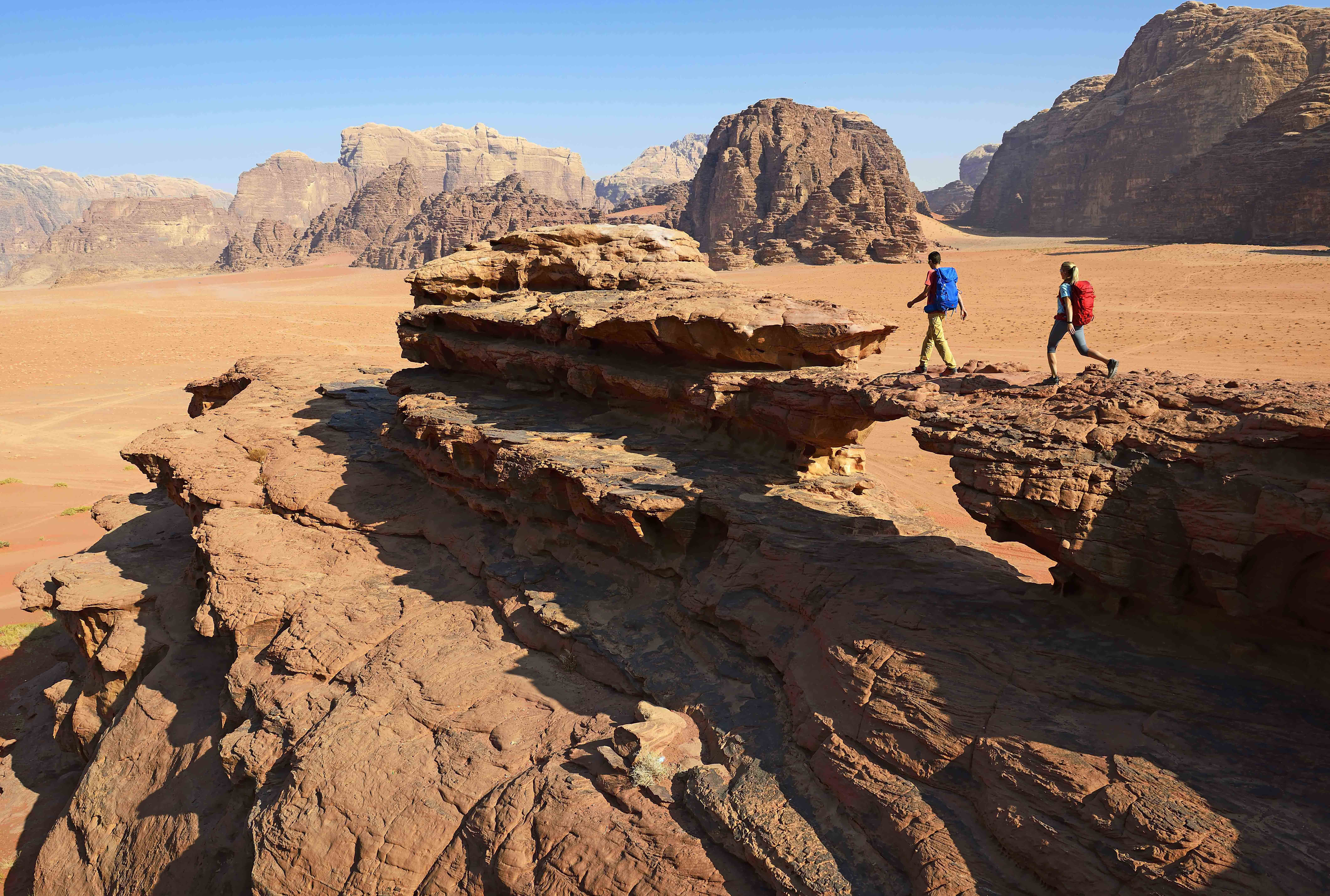
The moniker “Lost City of Petra” is aptly bestowed, as this ancient marvel remained hidden from the world for centuries. Following its abandonment during the early Crusades, Petra was largely deserted, save for a few Bedouin inhabitants. It wasn’t until the early 19th century that a European explorer “rediscovered” the ruins, sparking renewed interest and subsequent archaeological endeavours. Remarkably, only a fraction, roughly estimated at fifteen percent, of Petra has been unearthed by archaeologists to date, leaving much of its mysteries yet to be revealed.
Al-Khazneh
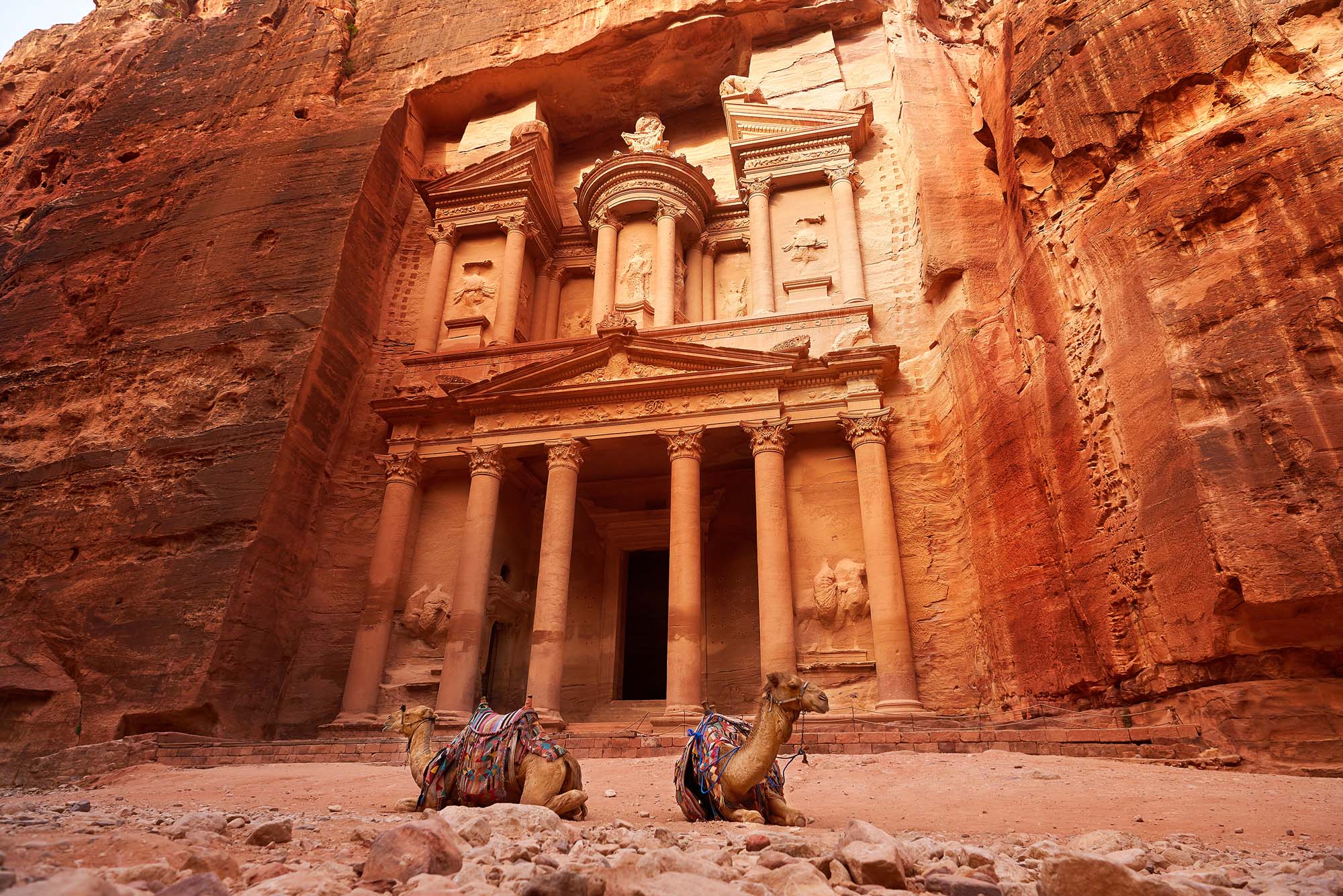
The renowned centrepiece of Petra is Al-Khazneh, famously dubbed The Treasury. Originally crafted as a royal tomb, the impeccably preserved stone facade of Al-Khazneh stands as a testament to the architectural brilliance of its creators, hewn from sandstone nearly two millennia ago. Rising approximately 40 meters tall, its intricate carvings showcase the artistic prowess of the ancient craftsmen. Despite local lore suggesting that the urn crowning the facade holds a pharaoh’s treasure, it is merely solid stone, adding to the mystique surrounding this iconic structure.
Siq
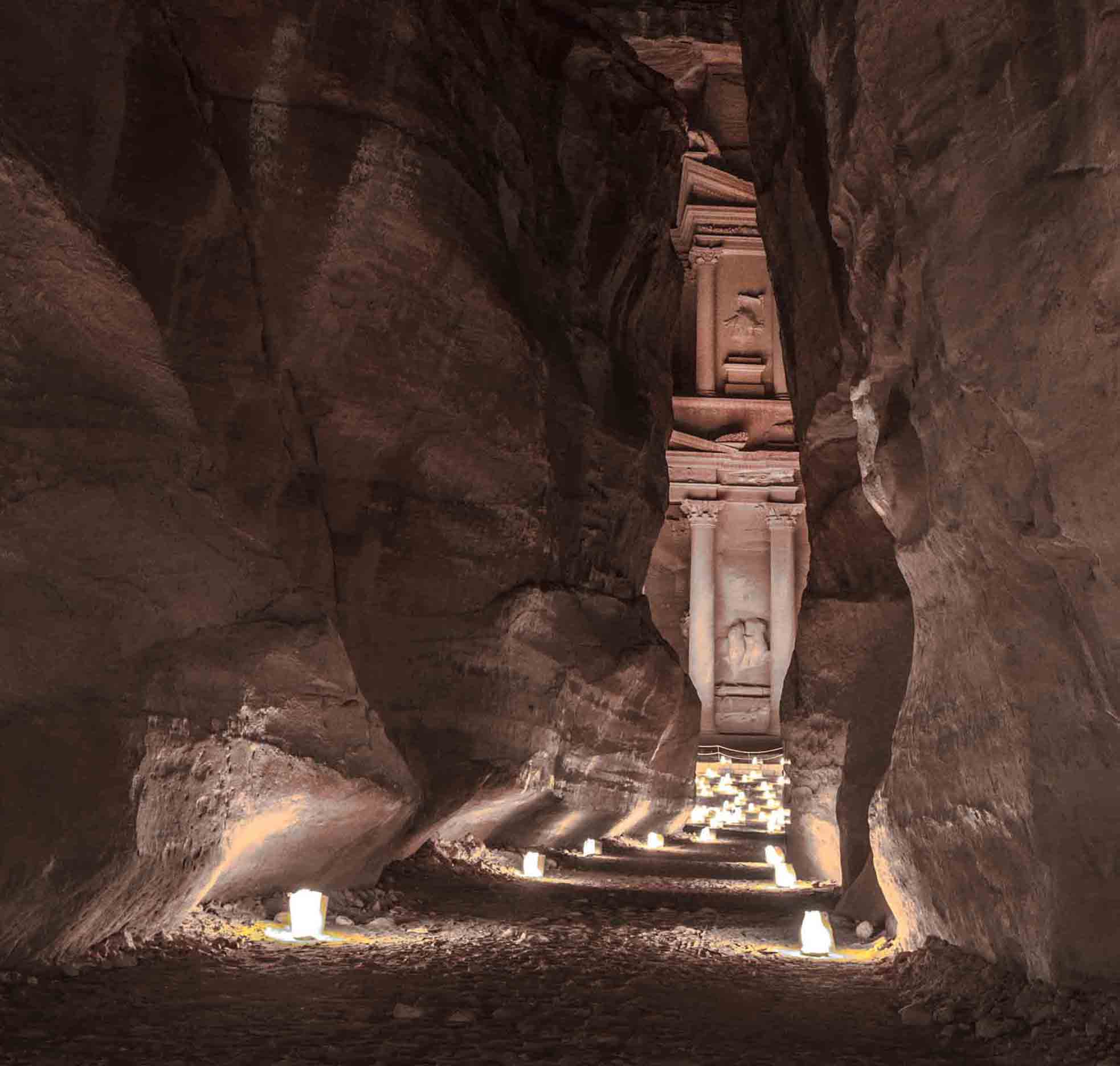 The narrow gorge leading to Al-Khazneh is famously referred to as the Siq. Stretching just over one kilometre in length, with towering walls soaring up to 80 meters high, the Siq served as the primary ancient entrance to Petra. As one progresses along its path, a breathtaking spectacle awaits. Gradually, the intricate facade of Al-Khazneh emerges into view, signaling the imminent arrival at this architectural marvel. Upon exiting the Siq, visitors are greeted by a vast canyon, with Al-Khazneh majestically rising before them. While predominantly a natural formation, certain sections of the Siq, including its initial gateway, bear the hallmark of ancient Nabataean craftsmanship through carved elements.
The Monastery, Petra
 The Monastery, one of Petra’s grandest structures, is among the largest monuments in the ancient city. Carved directly into the sandstone cliffs akin to Al-Khazneh, it shares a striking resemblance but surpasses it in size, towering nearly ten meters taller. This monumental edifice likely served significant purposes, possibly including religious ceremonies, evident from its spacious interior housing a single chamber. Dating back to approximately the second to third century A.D., the Monastery stands as a testament to the architectural prowess of its creators, emerging roughly a century after Al-Khazneh.



You might also like
COVID-19 Crisis: Save tourism MSMEs to save tourism, millions of jobs
MSMEs engaged in India’s travel & tourism business need to be protected from the unprecedented shock of COVID-19 crisis. Any delay will be tragic for the Country’s Tourism Sector that
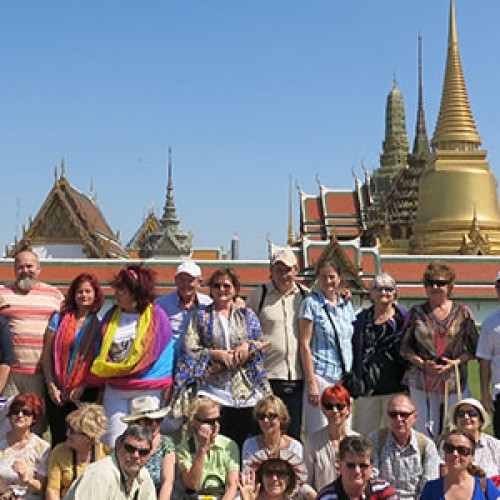
Thailand visitor arrivals surge 25% in Jan-May 2015
Total visitor arrivals to Thailand reached 12.4 million between January-May 2015, up by 25% over the same period of 2014, and are on track to cross the estimated 28-million projection

Adventure in Jordan – Indian TV Stars get the adrenaline rush of a lifetime!
Bringing together the ultimate combination of adrenaline pumping adventure, fitness & a healthy lifestyle – five Indian TV celebrities visited Jordan recently on an adventure trip. The celebrities who travelled