
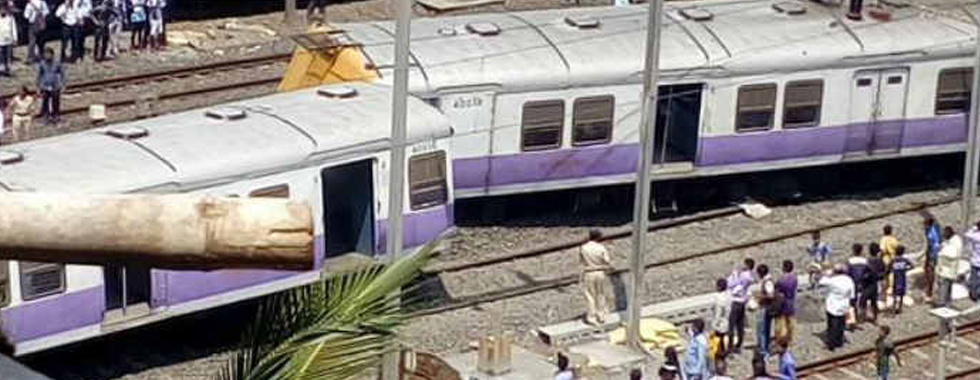
6 coaches of Mumbai local train derails, 5 injured
In the third incident of trail derailment within a span of a week, six coaches of a suburban train derailed near Mahim station on the Harbour Line on Friday morning, injuring five passengers, Western Railway said. No casualties have been reported so far.
The incident comes two days after Delhi-bound Kaifiyat Express derailed on August 23, injuring over 80 people. On August 19, 14 coaches of Utkal Express derailed killing 24 and injuring over 156 people. Both the incidents took place in Uttar Pradesh.
The derailment affected train movement on the Wadala-Andheri section, a railway official said. The local train, which started from Chhatrapati Shivaji Maharaj Terminus (CSMT), was on its way to Andheri station when a problem was detected in the overhead equipment (that supplies power for train movement) near Mahim station.
The train was to be shifted to another track because of the problem. Four front coaches derailed as it was reversing from the platform around 9.55 am, Western Railway’s Chief Public Relations Officer Ravinder Bhatkar said. Efforts were on to rerail the coaches as soon as possible, he said.
Train movement on the Wadala-Andheri section was affected due to the derailment. However, all western main lines in the Churchgate-Virar section were unaffected, Bhatkar said. An inquiry would be instituted to ascertain the cause of the incident, he said.
News Source: PTI



You might also like

Dreamy treats at JW Kitchen @JW Marriott Kolkata
Here’s a luxury, fine-dining restaurant that is incidentally the only one-of-a-kind not only in Kolkata but also in the eastern region of India and is a dream of every gourmet.

RezLive.com organized FAM Trip to Sri Lanka and Maldives
RezLive.com – India, rewarded patronage of their Travel Agents in India by extending opportunity to familiarize with Sri Lanka and Maldives as a destination in association with Sri Lankan Airlines,
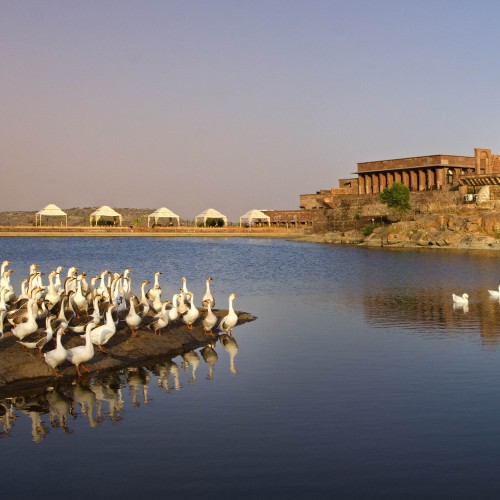
Inde Hotels adds acclaimed heritage property to its portfolio
Inde Hotels, a platform for independent hotels, providing end-to-end marketing and support services to drive revenue has successfully added another feather to its cap by adding the Bijolai Palace Hotel, Jodhpur under