
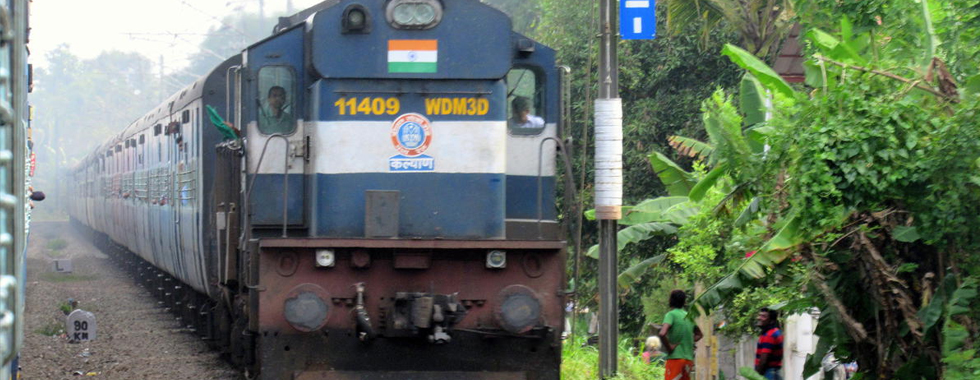
Russia’s 5 changes to increase Indian Railways’ train speed to 200 kmph
A protocol for this project was signed between the railway ministries of the two countries in October last year.
Russian Railways is helping India’s national transporter increase the speed of its passenger trains up to 200 km per hour. Russian Railways is at present collaborating with Indian Railways on a 575-km stretch between Nagpur and Secunderabad and submitted a preliminary report last week.
Here are 5 changes that Russia has suggested to make trains run at 200/kmph in India.
1. New Rakes
Since Indian Railways doesn’t have coaches that can move with a speed of 200 km per hour, a new type of passenger cars needs to be approved as well.
2. Infrastructural changes
It has, however, expressed concern over “a number of large bridges with speed limits” on this particular stretch and has recommended a detailed survey of all these structures on the basis of which measures for reconstruction/repair will be taken up. To reach the desired speed limit, Russian Railways has proposed several technical and technological solutions, including reconstruction of railway alignment as well as treating the earth bed where there are speed restrictions.
3. Change in railroad switches
It has also been pointed out that railroad switches, which enables trains to shift from one track to another, at stations on this stretch are not suitable for a speed of 200 km per hour and a different type of switch has been recommended.
4. Digital network
A digital technological communication network for the entire section, instead of the existing radio communication, was also proposed.
5. Safety measures
A high-speed rail network will also require safety measures for pedestrians and motor vehicles at rail crossings. Keeping this in mind, overpasses, anti-collision and anti-ram barriers, as well as automatic alarm systems have been suggested. A protective fencing along the length of the rail track was mooted in order to prevent accidents with people and animals on the track. The Russian Railways also suggested noise shields for tracks near residential areas.
A protocol for this project was signed between the railway ministries of the two countries in October last year. The high-speed project will be jointly financed and the cost will be split equally between the two countries. Currently, the fastest train in India is Gatimaan Express with top speed of 160 km per hour.
News Source: www.financialexpress.com



You might also like

HotelREZ Hotels & Resorts adopts Sabre’s hospitality solutions to provide customers with industry-leading reservation technology
HotelREZ Hotels & Resorts has completed the migration of its member hotels to Sabre’s SynXis Central Reservations and device responsive booking engine, securing its ability to provide more than 1,000 HotelREZ customers with

1589 Hotels added 16 properties to its portfolio from April 2017 to March 2018
It has been a very successful and aggressive growth year for 1589 Hotels. Pankaj Giroti, CHA – VP Development & PR, states that the Team together have been able to
India speeds up Delhi-Mumbai rail plan
The Indian government is accelerating its plan to speed up the key Delhi-Mumbai railway line, by ordering a new high-speed train that can operate on the existing tracks. The Economic